Proudly serving Phoenix, Mesa, Scottsdale, Tempe, Chandler, Glendale & surrounding areasCall or Text 24/7: 480-319-7533
Aerial view of residential neighborhoods, desert foothills, and arterial roads in Phoenix, AZ during late afternoon.

Affordable Commercial Roofing and Low-Cost Repair Options in Phoenix, AZ

For Phoenix owners comparing cheap commercial roofing options, Phoenix Commercial Roofing Company scopes TPO, spray foam, modified bitumen, built-up roofing, metal roofing, roof coatings, repair, replacement, and maintenance around the building rather than a teaser price. We price each affordable proposal around actual materials, labor, access, and code requirements. The most inexpensive workable approach may be a targeted repair, coating, or overlay when the existing roof can support it. A budget-friendly choice still needs the right insulation, membrane thickness, flashing, and preparation for Phoenix conditions. If your search starts with the cheapest bid, compare every line before deciding what value that number represents.

A useful low cost comparison starts with equivalent scope: the same tear-off or overlay approach, insulation R-value, membrane thickness, and flashing at every penetration. Quotes that appear similar can separate by tens of thousands of dollars after deck repairs, rooftop access, fall protection, and City of Phoenix Building Safety requirements are included. Durability also changes value because a shorter coating recoat cycle and a fully adhered TPO roof serve different ownership plans. Owners comparing the lowest prices should review materials, labor, warranty terms, and excluded work line by line before selecting a roof.

Compare Commercial Roofing Prices and Options

The price ranges above give commercial property owners a direct way to compare published roofing and maintenance scopes. Use the calculator next, then line up membrane type, insulation, attachment, flashing, removal, access, permits, disposal, and warranty coverage so each total reflects comparable work.

Phoenix Commercial Roof Price Ranges by Project Scope

Commercial roofing scopePublished price rangeWhat the range includes or what changes it
General commercial roof pricing$4.00 to $12.00 per square footSystem type, insulation, attachment method, flashing details, and tear-off needs change the total scope.
Phoenix commercial roofing project$2.00 to $12.00 per square footExisting roof condition, membrane choice, preparation, rooftop access, and required equipment affect the range.
Installed commercial roof pricing$5.50 to $8.00 per square footRoof area, system design, insulation, deck condition, and installation requirements shape the per-square-foot scope.
10,000-square-foot commercial roof$55,000 to $80,000 project total for a 10,000-square-foot commercial roofThe whole-building range changes with deck repair, insulation R-value, penetrations, and code-required work.
Broad commercial roofing work$1.00 to $14.00 per square footThe span reflects differences in repair, coating, restoration, material, and replacement scope.
Annual commercial roof maintenance$0.03 to $0.09 per square foot annuallyRoof area, inspection needs, existing defects, and included preventive work shape the maintenance scope.

Affordable Commercial Roofing Options in Phoenix, AZ

The most cost-effective system depends on the roof deck, slope, age, current condition, and how long the owner plans to hold the property. Phoenix options include TPO, modified bitumen, built-up roofing, spray foam, acrylic or silicone coatings, standing seam metal, and focused repair work, each with a different balance of preparation, upfront price, maintenance, and service life.

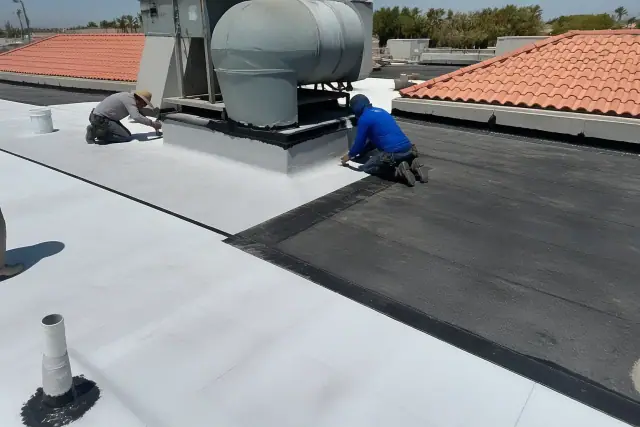
Technicians installing TPO and bitumen roofing around a rooftop unit in Phoenix, AZ.

TPO, Modified Bitumen, and Built-Up Roofs

These flat-roof systems can fit different building uses and budget priorities, but their specifications are not interchangeable. Compare how each assembly handles insulation, seams, layers, attachment, drainage, UV exposure, and monsoon weather before judging the total.

  • TPO uses heat-welded seams and a white reflective membrane, often mechanically attached over rigid insulation on retail and warehouse roofs.
  • Modified bitumen may use a torch-applied or self-adhered granular cap sheet over a base ply for UV and monsoon-hail exposure.
  • Built-up roofing combines multiple asphalt-saturated felt or fiberglass plies with hot or cold asphalt, so cost tracks with the specified ply count.
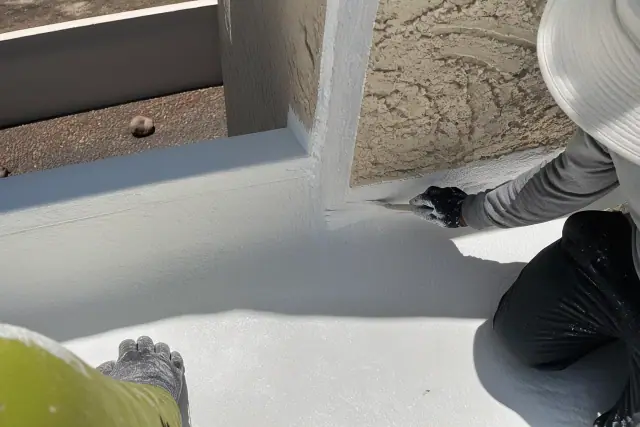
Spray foam and reflective roof coating applied to a parapet wall corner in Phoenix, AZ.

Spray Foam and Reflective Roof Coatings

Spray polyurethane foam and restorative coatings can preserve a suitable existing substrate without a full tear-off. Their value depends on cleaning, dry application conditions, seam and penetration details, foam depth, coating thickness, and future recoating rather than material price alone.

  • Closed-cell spray foam forms a seamless layer over many existing substrates, while Phoenix's dry climate can favor SPF curing conditions.
  • An elastomeric topcoat protects spray foam, and recoating every several years supports the system over its service life.
  • Acrylic and silicone coatings can extend an aging roof when substrate cleaning and seam detailing are included instead of skipped.
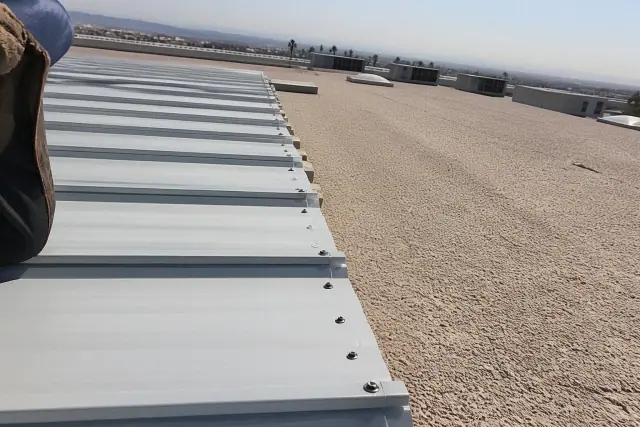
Technician installing industrial screws along a metal roofing seam on a sunny rooftop in Phoenix, AZ.

Metal Roofing and Long-Term Repair Value

Standing seam metal carries a higher upfront material cost than many membranes but can spread that investment across a longer service life. For an aging flat roof, a focused repair may protect cash flow now, while repeated patches can indicate that restoration or replacement deserves a full comparison.

  • Compare standing seam panels, fasteners, flashings, and expected ownership period against lower-upfront membrane choices.
  • Use repair for a limited leak or blister only after checking whether moisture or membrane aging extends beyond the visible symptom.
  • Compare restoration and replacement when recurring patch work no longer addresses the roof's broader condition.

Commercial Roofing Cost Factors in Phoenix, AZ

A commercial roof estimate changes with area, condition, system design, material specification, rooftop access, preparation, permits, disposal, crew scheduling, and required code work. Separating those factors makes it easier to see why two proposals with similar totals may deliver different assemblies and long-term value.

Roof Size, Deck Condition, and Drainage

Larger roofs can cost less per square foot because mobilization, equipment setup, and crew travel spread across more area. Wet insulation, rotted decking, delaminated cover boards, ponding water, or the need for tapered insulation add preparation that a surface-only review may miss, so moisture probing and drainage evaluation belong before final pricing.

Materials, Thickness, and Attachment

Membrane type and mil thickness, reinforcement scrim, insulation R-value, fastening pattern, fully adhered versus mechanically attached construction, flashing details, and BUR ply count all influence price and performance. Spray foam is priced around foam thickness in inches and protective coating thickness in mils, while wind uplift requirements can change attachment and material needs.

Access, Preparation, and Disposal

Multi-story access, parapet walls, rooftop mechanical units, and limited staging space can require cranes, hoists, or added fall-protection planning. A complete scope should also identify substrate cleaning, seam preparation, tear-off debris, old insulation, ballast rock, dumpster staging, and landfill tipping fees instead of leaving those costs to appear after work begins.

Permits, Timing, and Required Work

Phoenix commercial roofing work requires permitting through the City of Phoenix Development Services Department, while spray foam applications fall under Maricopa County Air Quality Department dust and VOC controls. Some jurisdictions apply a 25% reroof threshold, where repairing roughly a quarter or more of a roof section can trigger current International Building Code work for that section. A two-week project during peak summer heat may need adjusted work hours, and scheduling outside the June-through-September monsoon season can reduce weather delays during installation.

Budget-Friendly Commercial Roofing Planning

A budget friendly maintenance plan uses roof inspections twice a year to find blistering, ponding water, and seam separation before they spread. At $0.03 to $0.09 per square foot annually, source-researched maintenance packages make routine care on a 20,000-square-foot building a fraction of a full replacement cost.

Large roofs can also be divided into phased replacement sections across fiscal years while the building remains watertight. Reflective coatings may extend a suitable aging roof and reduce rooftop surface temperature, while planning outside monsoon months can limit wind-driven rain delays before a membrane or coating fully cures.

  1. Walk the roof, probe for moisture, and document deck, membrane, drainage, seam, and penetration conditions.
  2. Separate urgent leak or safety work from restoration, phased replacement, and future maintenance needs.
  3. Compare each proposal's membrane, insulation, fastening, flashing, preparation, removal, access, and disposal details line by line.
  4. Confirm permits, schedule, manufacturer material warranty, and installer workmanship coverage in writing before approval.

Request an Affordable Commercial Roofing Estimate in Phoenix, AZ

Phoenix Commercial Roofing Company holds Arizona Registrar of Contractors licensing and follows manufacturer installation standards recognized by the National Roofing Contractors Association. Schedule a roof walk for a project-specific estimate based on the building's condition, access, required preparation, material needs, and applicable work across Phoenix, Tempe, Mesa, Scottsdale, Chandler, Glendale, and the surrounding Valley.