Proudly serving Phoenix, Mesa, Scottsdale, Tempe, Chandler, Glendale & surrounding areasCall or Text 24/7: 480-319-7533
Aerial view of residential neighborhoods, desert foothills, and arterial roads in Phoenix, AZ during late afternoon.

Commercial Flat Roof Repair and Leak for Industrial and Retail Buildings in Phoenix, AZ

Phoenix Commercial Roofing Company repairs commercial flat and low-slope roofs across Phoenix for office buildings, retail centers, restaurants, manufacturing plants, warehouses, and multi-family properties. Our work includes TPO membrane repair, spray polyurethane foam restoration, roof coatings, modified bitumen and built-up roofing repairs, flashing repairs, maintenance, inspections, and replacement when damage is too extensive. We match each repair method to the existing roof system and damage, from hot-air welded TPO patches to torch-applied modified bitumen patches and fluid-applied flashing details. We also service commercial metal roofing and assess storm or hail damage when applicable.

Phoenix roof surfaces can exceed 160 degrees before monsoon downpours drop an inch of rain in under an hour, stressing seams, flashing, coatings, and drainage. We inspect the membrane, penetrations, drains, deck, and hidden moisture so the repair addresses the water-entry point rather than only the interior stain. Our crews are licensed through the Arizona Registrar of Contractors, bonded, and insured. We follow ASTM testing standards and NRCA installation guidance and pull permits through the City of Phoenix and Maricopa County building departments as required.

A photo-documented inspection and written estimate clarify the damaged area, recommended repair method, materials, and scope before work begins.

Phoenix Commercial Roofing Company provides commercial flat roof repair in Phoenix and throughout Tempe, Scottsdale, Mesa, Chandler, Glendale, and the greater Salt River Valley metro area.

★ ★ ★ ★ ★4.9/5 Customer Rating · 29 Years of Commercial Roofing Experience · Thousands of Roofs Serviced · Licensed, Bonded & Fully Insured · Serving Businesses & Property Managers

Commercial Flat Roof Repair Options & Benefits

What Does Commercial Flat Roof Repair Involve?

Commercial flat roofs are low-slope assemblies designed to move water toward drains, scuppers, or gutters. Repair restores a failed membrane, seam, flashing detail, penetration, or drainage area while preserving sound portions of the roof.

Because water can travel along the deck and insulation before appearing indoors, the visible ceiling stain may not identify the entry point. Photo documentation and moisture scans help trace the leak and determine whether insulation or deck material must also be replaced.

The repair method depends on the installed system, damage type, roof access, and remaining service life. When failures affect multiple systems or moisture is widespread, a vulnerability assessment can show whether sectional repair, restoration coating, or replacement is the sounder path.

Benefits of Professional Flat Roof Repair

A properly scoped repair targets the failure without defaulting to unnecessary tear-off work. System-compatible materials, careful preparation, and post-repair testing help protect the building, tenants, equipment, and inventory below.

  • Repair materials matched to TPO, foam, modified bitumen, BUR, coating, or metal systems
  • Root-cause leak tracing instead of patching only the visible interior stain
  • Removal and replacement of wet insulation when moisture has spread below the membrane
  • Drainage corrections that reduce recurring ponding in low areas
  • Seam testing for welded repairs and flood testing where drainage caused the problem
  • Manufacturer-specified seam widths, fastening patterns, primers, and substrates
  • Written documentation of the repair location, method, and materials used
  • Restoration options that can defer replacement when the roof remains a suitable candidate
Commercial Roof Repair Services

Commercial Flat Roof Repair Services

Phoenix commercial buildings use several low-slope roof systems, and each requires its own repair materials and application method. We inspect the existing assembly before selecting welded membrane work, foam repair and recoating, fluid-applied restoration, asphalt-based patches, or targeted flashing and drainage repairs.

TPO Membrane Repair

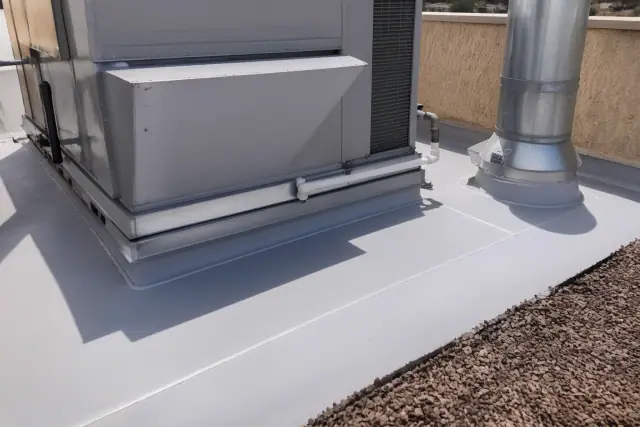
Hot-air welded TPO membrane repair on a commercial flat roof near a ventilation unit in Phoenix, AZ.

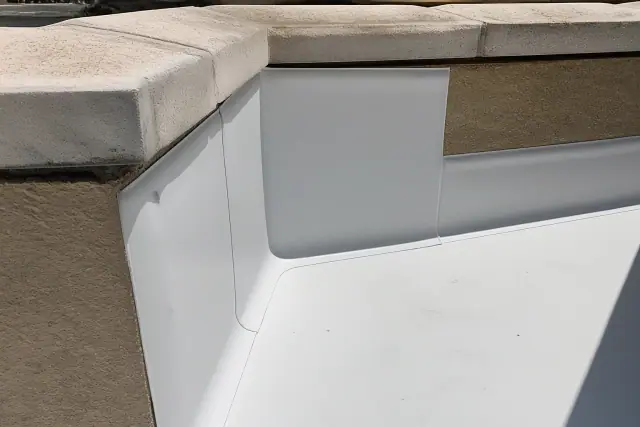
TPO has become the Valley's most common commercial low-slope system over the last decade. We use hot-air welding to fuse compatible patches into the existing sheet, creating a homogeneous seam, and look for separation, shrinkage, dirt tracking, bubbling, and blistering. A properly installed and maintained TPO roof typically lasts 20 to 30 years, but Phoenix seam inspections should occur at minimum twice a year rather than on the annual cycle common in milder climates.

Request Estimate

Spray Foam Roof Repair and Recoating

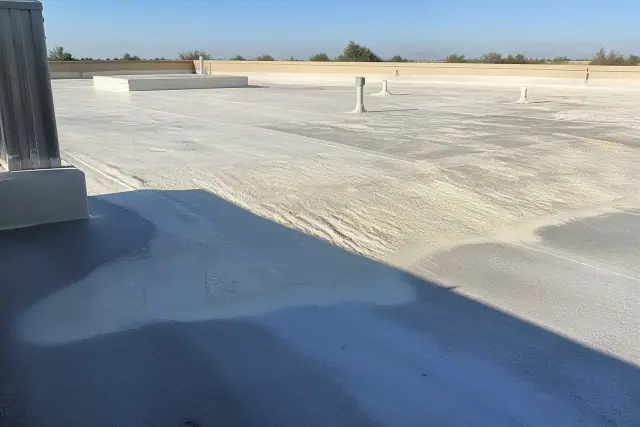
Spray foam roof repair and recoating on a commercial flat roof in Phoenix, AZ under bright sunlight.

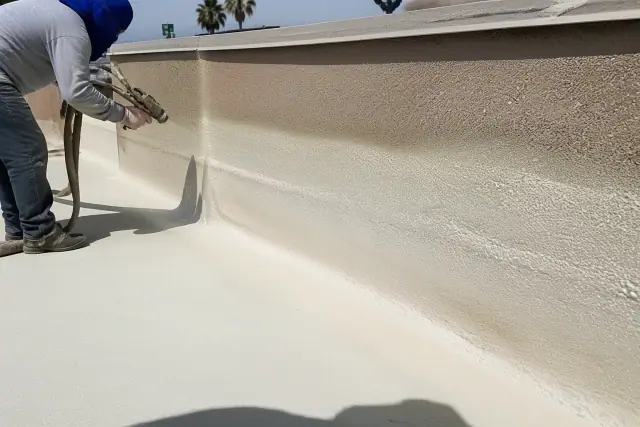
Spray polyurethane foam forms a seamless, fully adhered, closed-cell layer that provides waterproofing and insulation around irregular rooflines, equipment curbs, and penetrations. Repair can restore damaged foam and renew its protective elastomeric surface. A foam roof generally needs recoating every 10 to 15 years rather than full tear-off, supporting a 25 to 30 year lifecycle when maintained.

Request Estimate

Commercial Roof Coating Systems

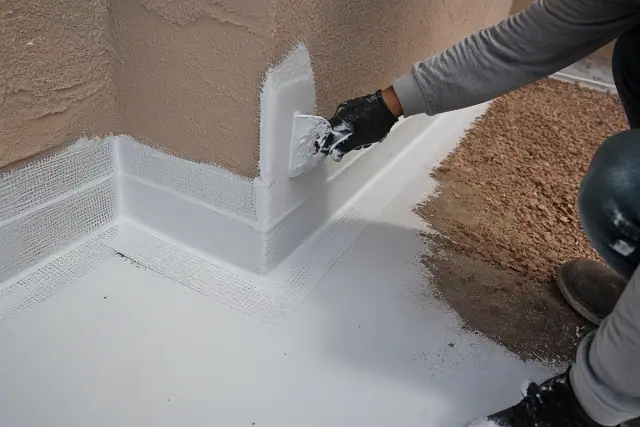
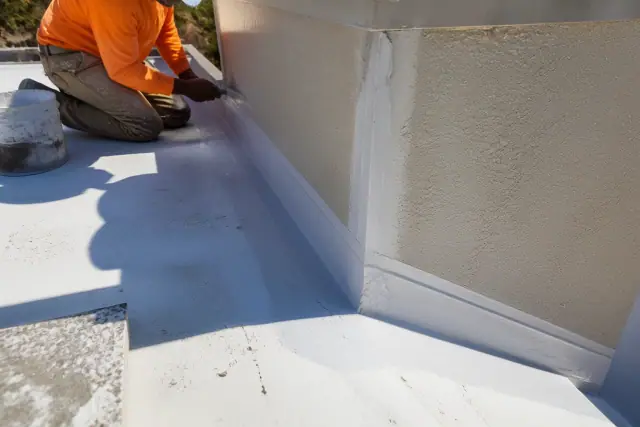
Wet white reflective roof coating applied to a parapet wall corner at a commercial job site in Phoenix, AZ.

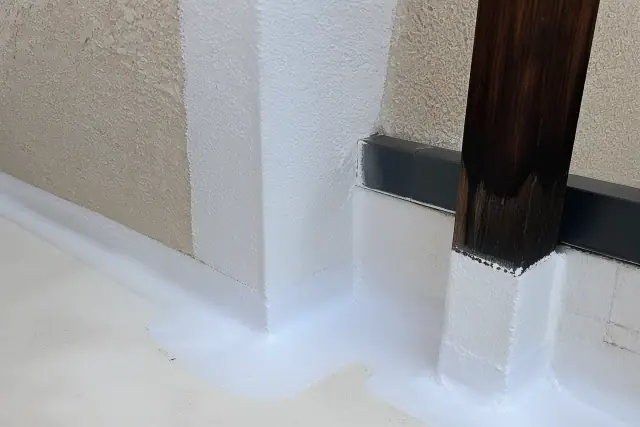
Silicone, acrylic, and elastomeric coatings can restore suitable TPO, metal, BUR, and modified bitumen roofs by sealing seams, fastener heads, and minor cracks into a monolithic waterproof layer. Silicone restoration coatings run roughly $2 to $7 per square foot installed and resist UV exposure and standing water better than acrylic where ponding recurs. A properly applied coating can add 10 to 15 years of service life while its reflective surface helps reduce rooftop heat and cooling demand.

Request Estimate

Modified Bitumen Roof Repair

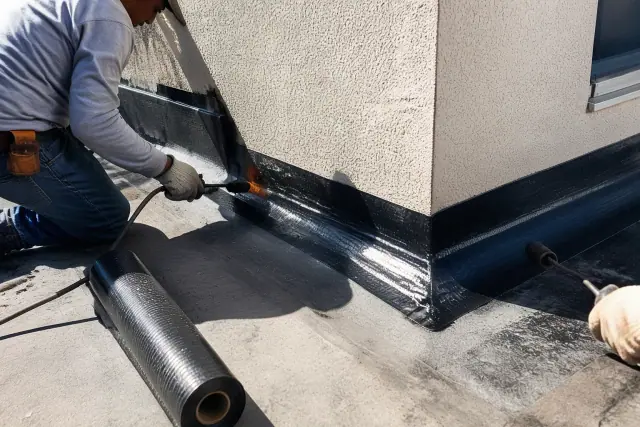
Contractor sealing a modified bitumen roof seam on a commercial building in Phoenix, AZ.

Modified bitumen combines asphalt with polymer modifiers for flexibility during Phoenix daily temperature swings of 30 to 40 degrees. We match torch-applied or cold-adhesive cap-sheet patches to the roof's original installation method. Torch work receives careful heat control and OSHA-compliant fire-watch practices, especially where older felt beneath the surface has dried out.

Request Estimate

Built-Up Roofing Repair

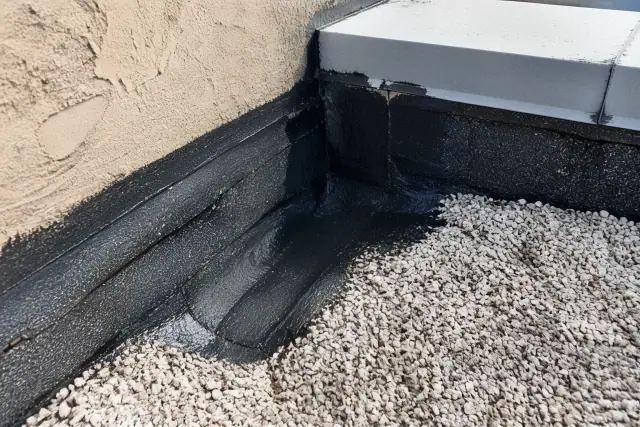
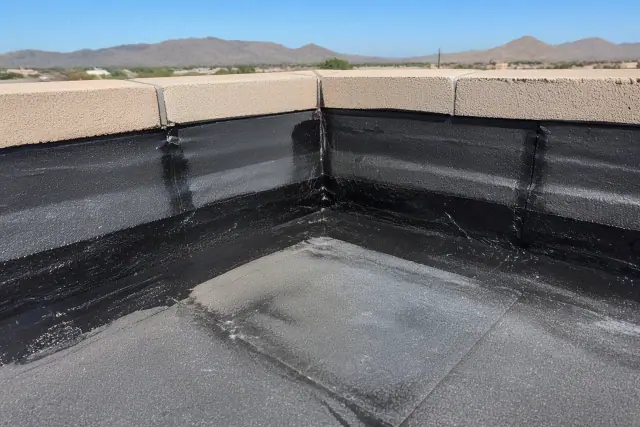
Close-up of a commercial flat roof repair on a parapet wall with sealant and gravel ballast in Phoenix, AZ.

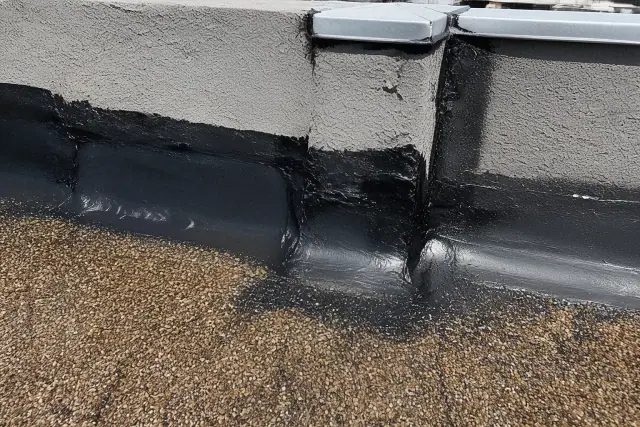
Built-up roofing, or BUR, remains common on older Phoenix commercial properties, especially downtown and along the central corridor on buildings constructed before the 1990s. Repair involves moving back gravel surfacing, replacing damaged felt plies, and resealing the area with hot asphalt to match the existing multi-ply membrane. That layered construction also provides useful puncture resistance around frequently accessed rooftop mechanical equipment.

Request Estimate

Flashing, Drainage, and Puncture Repair

Close-up of industrial sealant repair on a parapet wall flashing at a commercial flat roof site in Phoenix, AZ.

Targeted repairs address split sealant at parapets, HVAC curbs, and penetrations; punctures caused by foot traffic, tools, or equipment work; and low areas that hold water. Depending on the assembly, the scope may use a fluid-applied flashing detail, membrane patch, drain correction, or removal of wet insulation. Early attention keeps a localized opening from spreading moisture through a larger roof section.

Request Estimate
Low-Slope Roof Systems

Flat and Low-Slope Roofing Options

The right repair or replacement choice depends on the current assembly, remaining service life, building use, rooftop equipment load, moisture extent, and budget. These five option groups summarize how Phoenix's main commercial roofing systems respond to heat, monsoon rain, foot traffic, and restoration work.

Heat-welded TPO membrane seams on a commercial flat roof parapet wall in Phoenix, AZ.

TPO Membrane Roofing

TPO is a reflective sheet membrane whose welded seams require compatible materials and controlled hot-air application. Its light surface can reduce rooftop temperatures compared with dark BUR or modified bitumen, an important consideration for cooling loads in Phoenix.

  • Hot-air welded patches fuse into the existing membrane sheet
  • White reflective surfacing helps limit summer rooftop heat
  • Seam separation, shrinkage, and dirt tracking can signal weld failure
  • Bubbles or blisters may indicate moisture trapped below the sheet
  • Phoenix conditions call for seam checks at minimum twice each year
Request Estimate
Contractors applying spray polyurethane foam to a commercial flat roof parapet wall in Phoenix, AZ.

Spray Polyurethane Foam Roofing

Spray polyurethane foam begins as a liquid and expands into a seamless, fully adhered roof layer. Its closed-cell structure supplies waterproofing and insulation in one application and ranks among the highest R-value-per-inch options used for commercial roofing.

  • Seamless application removes membrane laps and joints
  • Foam conforms around irregular rooflines, penetrations, and equipment curbs
  • Closed cells combine insulation and waterproofing in one layer
  • A protective elastomeric coating shields the foam surface
  • Periodic recoating can avoid a full tear-off cycle
Request Estimate
Elastomeric coating applied to a parapet wall corner on a commercial building in Phoenix, AZ.

Silicone, Acrylic, and Elastomeric Coatings

Restoration coatings can renew an existing roof that is weathered but still a suitable substrate. Product selection depends on the roof material and whether standing water, intense UV exposure, or reflective performance is the stronger concern.

  • Silicone resists UV exposure and recurring standing water
  • Acrylic offers a reflective restoration option where ponding is not the main issue
  • Elastomeric coatings flex over compatible commercial roof surfaces
  • Fluid application seals minor cracks, seams, and fastener heads
  • Reflective surfacing can lower roof temperature and cooling demand
Request Estimate
Close-up of bitumen membrane roofing being sealed along a parapet wall at a job site in Phoenix, AZ.

Modified Bitumen and Built-Up Roofing

Modified bitumen and BUR are asphalt-based systems with durable, multi-layer construction. When maintained properly, both can deliver 15 to 25 years of service life and provide strong puncture resistance where foot traffic or rooftop equipment is common.

  • Polymer-modified asphalt improves flexibility in temperature swings
  • Modified bitumen can use torch-applied or cold-adhesive patches
  • BUR combines asphalt, felt plies, and gravel surfacing
  • Repair materials should match the existing membrane structure
  • Torch application requires trained heat control and fire-watch protocols
Request Estimate
Contractor sealing a commercial flat roof parapet joint in Phoenix, AZ.

Repair, Restoration, or Replacement

Localized damage may suit a repair, while a weathered but watertight roof may qualify for restoration. Replacement becomes more practical when several systems fail together, insulation is saturated across large areas, or an older roof produces recurring leak calls.

  • Damage exceeding 25% can trigger broader current-code requirements
  • Roofs past 20 years with repeated leaks deserve a replacement assessment
  • TPO, metal, modified bitumen, and foam can be compared by building use and equipment load
  • Properly fastened and sealed commercial metal roofing can last 40 to 70 years
  • Full replacement runs roughly $2.00 to $12.00 per square foot installed, depending on the selected system
Request Estimate
Finding the Right Fit

Choosing the Right Commercial Roof Repair Approach

A useful recommendation starts with evidence: the entry point, membrane condition, hidden moisture, drainage performance, repair history, access, and remaining roof life. We then match the repair to the installed system and compare the scope with projected repair costs over the next five years when replacement is under consideration. The written estimate identifies the proposed method and cost before work starts.

Documented Roof Inspection

The assessment covers the membrane, flashing, drains, penetrations, and deck. Photos and moisture scans document current conditions and help distinguish a surface defect from wet insulation or more extensive substrate damage.

Standards-Based Repair Methods

Repairs follow manufacturer-specified preparation, primers, seam widths, and fastening patterns for the existing system. Our work also follows ASTM testing standards and NRCA installation guidance, with seam or drainage verification selected for the completed repair.

Phoenix Flat Roof Experience

Desert UV, prolonged heat, abrupt thermal cycling, and wind-driven monsoon rain age commercial roofs differently than a humid coastal climate. Our Phoenix-focused assessments account for the seams, flashing details, drainage areas, and coatings that take the greatest stress in these conditions.

What Sets Us Apart

Why Phoenix Businesses Choose Our Roof Repair

Phoenix Commercial Roofing Company combines root-cause diagnosis with system-specific repair work for flat and low-slope commercial roofs. Our crews are licensed through the Arizona Registrar of Contractors, bonded, and insured; required permits go through the City of Phoenix or Maricopa County building departments. Written estimates and closeout reports give owners, managers, tenants, and insurance carriers a clear record of the recommended scope and completed work.

Request Free Roof Inspection

Ponding Water After Monsoons

Low slope and sudden monsoon rainfall can leave water sitting in depressions when drains or roof geometry do not move it away. Ponding that remains more than 48 hours accelerates membrane deterioration and adds dead-load stress to the deck, so the repair should address drainage as well as the weathered surface.

UV and Heat Degradation

Constant desert UV dries membrane plasticizers and can cause surface cracking, alligatoring, and granule loss on BUR roofs. Daily expansion and contraction also pull at seams and flashing, making heat-related wear a major driver of premature roof failure across the Valley.

Membrane Tears and Punctures

HVAC service traffic, dropped tools, and rooftop equipment installation can puncture a membrane and open a route into the insulation. A small opening may permit a localized patch when caught early, but delayed repair can require cutting out and replacing saturated insulation along with the membrane.

Flashing and Sealant Failures

Parapet walls, HVAC curbs, and roof penetrations concentrate movement where dissimilar materials meet. Repeated thermal expansion and contraction can split sealant that appeared intact in spring, leaving flashing details open to wind-driven summer rain.

Trapped Moisture and Wet Insulation

Water can move laterally across the deck or through insulation before reaching the occupied space, so the leak stain below may be far from the roof opening. Moisture scans help define the affected area and show whether the job needs a surface repair or removal of wet insulation and a larger membrane section.

Aging Roofs and Recurring Leaks

Frequent leak calls, failures across several roof components, and widespread saturated insulation can make repeated patching more expensive than a planned replacement. A roof vulnerability assessment compares condition, remaining life, and projected repair costs so the decision is based on the whole assembly rather than the latest leak alone.

How It Works

Our Commercial Flat Roof Repair Process

The process moves from inspection and leak tracing to a documented scope, system-matched installation, verification, and closeout. Each step is designed to explain what failed, how the repair will be completed, and how the finished work was checked.

01.

Initial Inspection and Photos

We work through a roof inspection checklist covering the membrane, flashing, drains, penetrations, and deck. Photos create a clear record of surface conditions and visible damage.

02.

Moisture Scan and Leak Tracing

We trace the path of water from the occupied space back through the deck and insulation to its entry point. Moisture scanning helps identify concealed wet areas that surface inspection alone may miss.

03.

Repair Method and Written Estimate

The existing system, damage type, wet area, access, and remaining service life determine the repair method. A written estimate defines the scope and cost before work starts.

04.

System-Specific Preparation and Repair

We prepare the substrate, apply primer where required, and install compatible material to manufacturer specifications. The work may use a welded TPO patch, torch-applied or cold-adhesive modified bitumen, fluid-applied flashing, or membrane section replacement.

05.

Seam and Drainage Testing

Welded seams are tested after installation. Where ponding contributed to the failure, we can flood-test the repaired drainage area to verify water movement and waterproofing.

06.

Written Repair Closeout

The closeout report records the repair location, selected method, and materials used. This documentation gives the owner or property manager a practical reference for maintenance, future inspections, and applicable insurance communication.

Protect Your Building

Schedule a Commercial Flat Roof
Repair Inspection

Request a free roof inspection for a leak, failed seam, damaged flashing, puncture, ponding area, or aging commercial roof. Phoenix Commercial Roofing Company will document the condition and provide a written estimate for the recommended repair, restoration, or replacement scope.

Commercial Roof Repair Help

Commercial Flat Roof Repair FAQs

These answers cover commercial flat roof repair methods, Phoenix pricing factors, system lifespans, inspection timing, replacement thresholds, lease responsibilities, and restoration options.

Call Our Roof Repair Team

Repair starts by locating the actual entry point through inspection, photos, and moisture scanning of the membrane, flashing, drains, penetrations, and deck. The method is matched to the installed system, such as a hot-air welded TPO patch, torch-applied modified bitumen patch, fluid-applied flashing detail, or membrane section replacement. After substrate preparation and installation to manufacturer specifications, the completed repair receives the appropriate seam or drainage test.

Flat and rolled roof repairs in Phoenix typically run $500 to $2,500 or more. Smaller membrane patches and flashing repairs often fall between $400 and $1,000, while larger membrane failures with wet-insulation replacement can cost $1,200 and up. The installed system, leak location, access, and hidden water damage determine the final scope, which is documented in a written estimate after inspection.

Most commercial flat roofs last 15 to 35 years depending on the system and maintenance. TPO commonly lasts 20 to 30 years, modified bitumen and BUR systems generally last 15 to 25 years, and spray foam can exceed 30 years with periodic recoating. Phoenix UV exposure and monsoon stress can push neglected roofs toward the shorter end of these ranges.

The 25% rule generally refers to code and insurance standards under which damage or repair affecting more than 25% of a roof can require the entire roof section, or sometimes the whole roof, to meet current code instead of receiving a limited patch. Local building departments and insurance adjusters may apply the threshold differently. We assess the specific roof against current requirements before recommending repair or replacement.

Responsibility depends on whether the lease is gross, modified gross, or triple net and on the exact repair language. In many triple-net arrangements, the tenant handles routine maintenance while the landlord remains responsible for structural roof repair and replacement, but the document controls. Review the lease carefully and use a written roof assessment to give the parties a shared record of the damage and recommended scope.

Arizona UV exposure and monsoon storms tend to move flat roofs toward the lower end of their system's normal lifespan without regular maintenance. A well-maintained TPO or foam roof can still reach 25 to 30 years in Phoenix, while neglected ponding water and open flashing can force major work before the 20-year mark. The current membrane condition and moisture below it matter more than age alone.

Replacement becomes more practical when damage approaches or exceeds the 25% threshold, insulation is saturated across large sections, several systems are failing, or a roof past 20 years produces recurring leak calls. A vulnerability assessment can compare projected repair costs over the next five years with replacement cost. That gives the decision a condition-based and financial basis rather than relying on age alone.

TPO seams in Phoenix should be inspected at minimum twice a year rather than only once annually as may be sufficient in milder climates. Inspections should check seam separation, shrinkage at flashing, dirt tracking, bubbling, and blistering. Finding those conditions early can keep a small membrane defect from reaching the insulation.

Water that remains in low areas for more than 48 hours accelerates membrane breakdown and adds dead-load stress to the roof deck. Sudden Phoenix monsoon rain makes drainage performance especially important on low-slope roofs. A lasting repair may need to correct the drain or low area as well as restore the membrane.

A coating can be appropriate when the existing TPO, metal, BUR, or modified bitumen roof remains a suitable substrate and is weathered rather than broadly saturated. Silicone, acrylic, or elastomeric material can seal seams, fasteners, and minor cracks into a monolithic layer. A properly applied system can add 10 to 15 years of service life, with silicone particularly useful where ponding water recurs.

After the damaged area and any wet material below it are identified, the substrate is prepared for compatible TPO repair material. A hot-air welder fuses the patch into the existing sheet to form a homogeneous seam rather than relying on tape or glue that can peel under Phoenix heat. The welded seam is tested before closeout.

Modified bitumen receives a torch-applied or cold-adhesive cap-sheet patch matched to its original application method. For BUR, the crew moves back the gravel, replaces damaged felt plies, and reseals the area with hot asphalt to recreate the existing membrane structure. Torch-applied work requires controlled heat and fire-watch protocols.

A typical tear-off and replacement on a mid-size commercial building takes one to three weeks. Square footage, the selected roof system, access, and weather affect the schedule. Monsoon conditions can pause torch and adhesive work, so timing must account for safe installation windows.