Proudly serving Phoenix, Mesa, Scottsdale, Tempe, Chandler, Glendale & surrounding areasCall or Text 24/7: 480-319-7533
Aerial view of residential neighborhoods, desert foothills, and arterial roads in Phoenix, AZ during late afternoon.

TPO Roofing Installation and Membrane Repair for Commercial and Retail Properties in Phoenix, AZ

Phoenix Commercial Roofing Company provides TPO roofing for flat and low-slope commercial properties throughout Phoenix and the surrounding Valley. Our work includes TPO installation, repair, replacement, inspection, and maintenance. We serve warehouses, office buildings, retail centers, restaurants, hospitals, and school facilities. Our crews install 60-mil and 80-mil thermoplastic polyolefin membranes for demanding commercial roof conditions.

Flat commercial roof surfaces across the Salt River Valley regularly climb past 150°F in summer, placing sustained thermal stress on inferior membranes. TPO's light, reflective surface is designed to resist Arizona UV exposure and heat cycling. Our installers train specifically in TPO application and use hot-air welding equipment to produce seams that meet ASTM D6878 standards. Arizona Registrar of Contractors licensing and commercial insurance coverage give property managers documented qualifications before work begins.

We follow National Roofing Contractors Association guidance for fastening, insulation, and drainage, then document the work for warranty registration. Manufacturer TPO warranties commonly run 15 to 20 years depending on membrane thickness and installation method.

Phoenix Commercial Roofing Company provides TPO roofing in Phoenix and across the surrounding Valley, including Scottsdale, Tempe, Mesa, Chandler, Glendale, and Peoria.

★ ★ ★ ★ ★4.9/5 Customer Rating · 29 Years of Commercial Roofing Experience · Thousands of Roofs Serviced · Licensed, Bonded & Fully Insured · Serving Businesses & Property Managers

Phoenix TPO Roofing Options & Benefits

What Is TPO Roofing?

Thermoplastic polyolefin, or TPO, is a single-ply roofing membrane used on flat and low-slope commercial buildings. White or light-colored sheets reflect solar radiation rather than absorbing the heat into the roof assembly.

The membrane is installed over rigid insulation board on the structural deck, with an optional cover board where added puncture resistance is needed. Automated hot-air welders fuse adjoining sheets into seams stronger than the surrounding material.

TPO provides wind resistance, chemical resistance, and UV-resistant compounding for desert conditions. Its long-term performance depends heavily on substrate preparation, seam quality, drainage, and documented maintenance.

Benefits of TPO Roofing in Phoenix

A reflective TPO surface can reduce cooling costs by 20 to 30 percent in warm climates compared with dark, heat-absorbing membranes. On a warehouse or retail property with a $5,000 monthly summer cooling bill, that reflectivity can reduce utility spend without changing the HVAC system.

  • Reflects intense solar radiation instead of storing rooftop heat
  • Handles a 70-degree roof-deck swing between a June afternoon and a December night
  • Typically delivers 18 to 22 years of service life when properly installed in the Phoenix metro
  • Well-maintained systems can reach the 20 to 30 year range
  • Heat-welded seams resist separation when installation temperatures are controlled
  • Offers strong puncture resistance against hail and routine rooftop activity
  • Resists chalking and embrittlement caused by constant desert UV exposure
  • Many TPO products support ENERGY STAR reflective roofing criteria and cool-roof incentives
TPO Roofing Services

Commercial TPO Roofing Services

From new membrane installation to targeted repairs and maintenance, our TPO services address the full roof lifecycle. We evaluate the deck, insulation, seams, flashing, drainage, and rooftop penetrations before recommending repair, recovery, or replacement.

Commercial TPO Installation

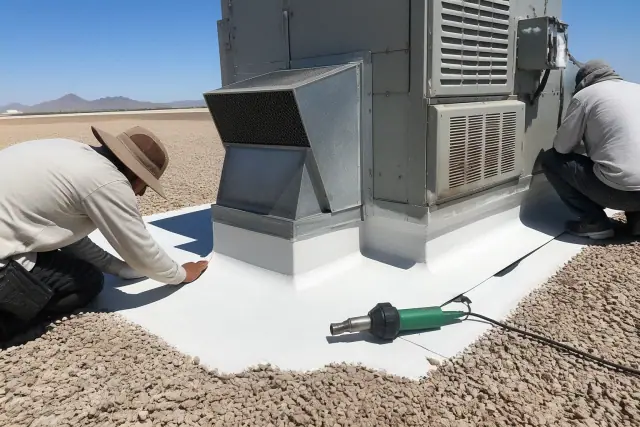
Technicians heat-welding TPO membrane seams around a rooftop unit in Phoenix, AZ with gravel and a stucco wall nearby.

We prepare the substrate, lay out insulation, place the membrane, weld seams, complete flashing details, and perform a final walk-through. Each stage is documented so the owner has a clear record of materials and placement.

Request Estimate

TPO Roof Repair

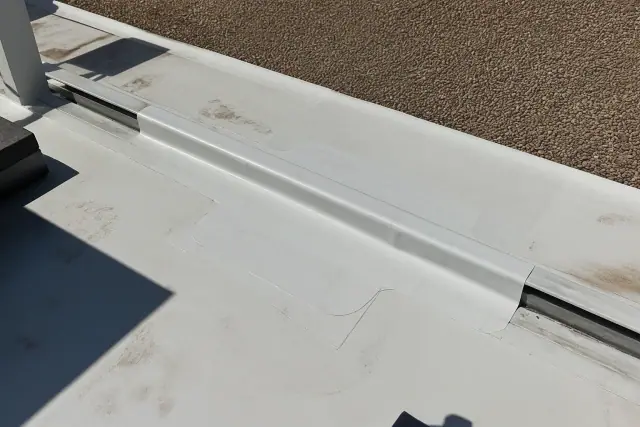
Heat-welded TPO roof repair patch on a substrate transition in Phoenix, AZ.

We repair seam separation, curled edges, punctures, tears, and localized leak paths with heat-welded repair membrane rather than adhesive-only patches. This approach is designed to hold up better under Phoenix UV exposure.

Request Estimate

TPO Roof Replacement

Technicians heat-welding TPO roofing membrane seams near a ventilation unit on a rooftop in Phoenix, AZ.

Widespread brittleness, failure across multiple seams, or a roof beyond its 20-year design life can make full replacement more cost-effective than repeated patches. Tear-off exposes the deck so hidden rot and moisture damage can be corrected before the new assembly is installed.

Request Estimate

TPO Roof Recover Installation

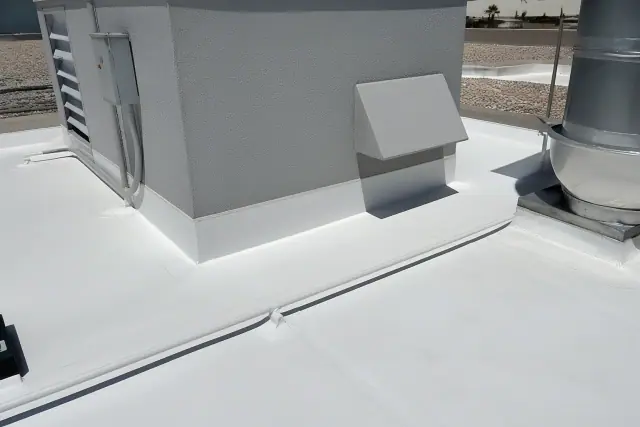
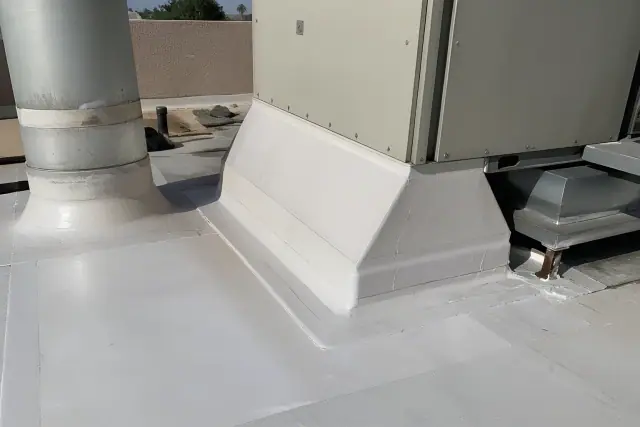
Heat-welded TPO membrane detailing around an HVAC unit on a roof in Phoenix, AZ.

When the existing roof is dry and structurally sound, TPO can be installed over it for $5 to $8 per square foot. A recover avoids tear-off costs and landfill fees while providing a fully welded new membrane.

Request Estimate

Commercial TPO Roof Inspections

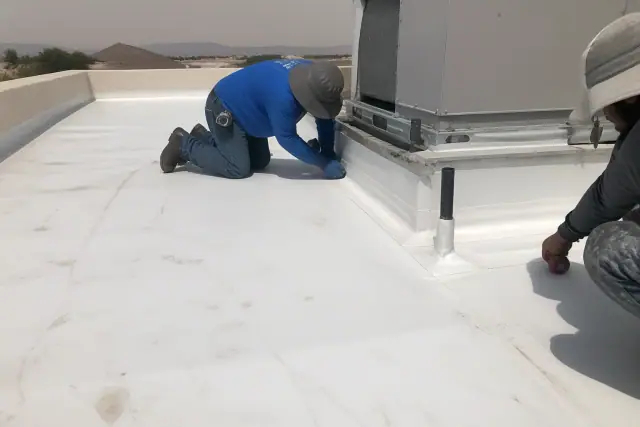
Technicians performing a TPO roof inspection on a commercial building in Phoenix, AZ.

Our inspections check seam integrity, flashing, drainage, membrane wear, and rooftop equipment penetrations. Owners receive a written report that can support insurance claims, maintenance planning, or replacement budgeting.

Request Estimate

TPO Roof Maintenance

Technicians performing TPO membrane detailing around a rooftop HVAC unit in Phoenix, AZ.

Biannual inspections-once before monsoon season and once after-help catch seam stress, debris buildup, and blocked drainage before they become leaks. Documented maintenance also protects manufacturer warranty coverage.

Request Estimate
TPO Roofing Options

Types of TPO Roofing Options

The right assembly depends on deck condition, insulation requirements, roof traffic, penetrations, access, and budget. Membrane thicknesses such as 45-mil, 60-mil, and 80-mil also affect installation cost and system selection.

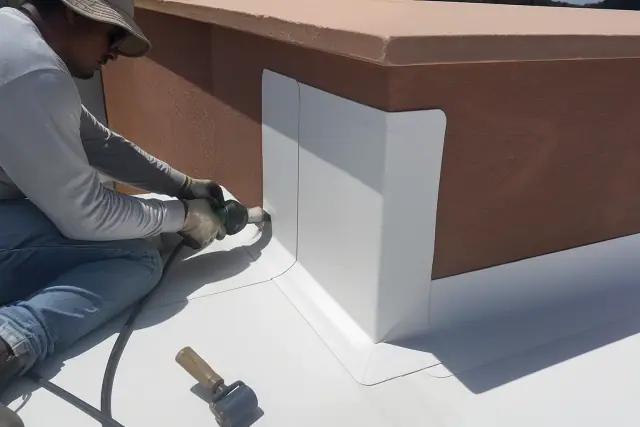
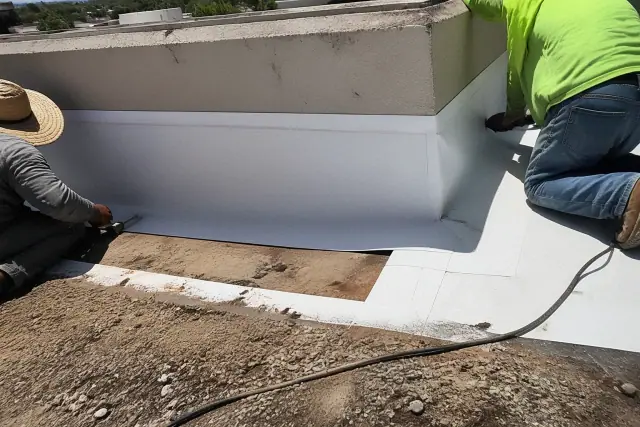
60-mil TPO membrane installed on a parapet wall corner with heat-welded seams in Phoenix, AZ.

60-Mil TPO Membrane

A 60-mil TPO membrane provides a reflective single-ply surface for Phoenix flat and low-slope commercial roofs. Its performance depends on the complete assembly beneath it and the quality of every welded detail.

  • White or light-colored surface reflects solar radiation
  • Rigid insulation creates thermal performance and a stable substrate
  • Automated hot-air equipment fuses adjoining sheets
  • Fastener spacing follows manufacturer specifications
  • Flashing and drainage details are documented during installation
Request Estimate
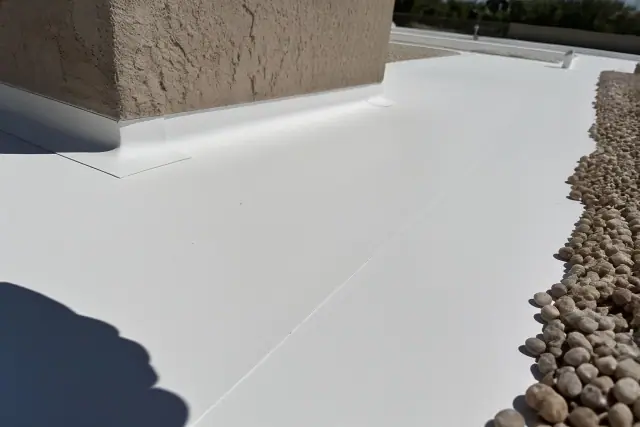
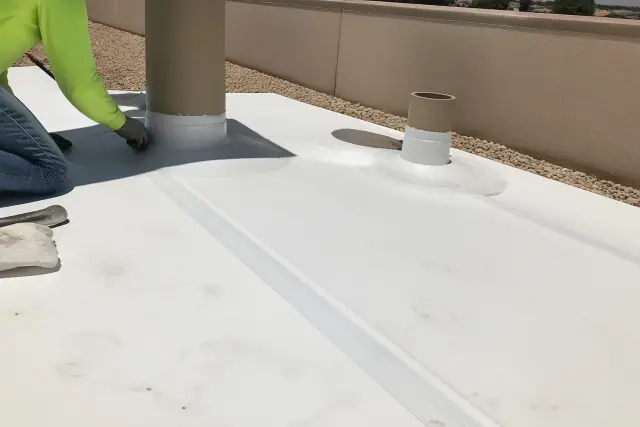
80-mil TPO membrane with heat-welded seams and desert gravel ballast on a rooftop in Phoenix, AZ.

80-Mil TPO Membrane

An 80-mil membrane is a thicker TPO option for commercial owners comparing system specifications. Thickness is one of the primary cost drivers and also affects the manufacturer's available warranty terms.

  • UV-resistant compounding helps resist chalking and embrittlement
  • Heat-welded seams create strength at adjoining sheets
  • Optional cover board can add puncture resistance
  • Insulation R-value is matched to project requirements
  • Warranty registration records the selected membrane and installation method
Request Estimate
TPO membrane roof repair with heat-welded seams on a rooftop in Phoenix, AZ.

TPO Recover Over Existing Roofing

A TPO recover can preserve a suitable existing assembly while adding a fully welded new membrane. We first confirm that the roof is dry and structurally sound rather than trapping a hidden problem below the reflective surface.

  • $5 to $8 per square foot for an eligible recover installation
  • Avoids old-roof tear-off costs and landfill fees
  • Requires a dry, structurally sound existing roof
  • Moisture, delamination, and deck condition are checked first
  • Penetrations, access, and insulation needs still affect pricing
Request Estimate
Crew members sealing TPO roofing membrane seams at a parapet wall during a full roof replacement in Phoenix, AZ.

Full Tear-Off TPO Replacement

Full tear-off removes the old roof so the structural deck can be evaluated directly. This option is appropriate when widespread failure or concealed moisture makes recovery unsuitable.

  • $7 to $12 per square foot including materials, labor, and disposal
  • Exposes hidden rot and moisture damage
  • Allows deck repairs before new insulation is placed
  • Supports a fresh layout for drainage and fasteners
  • Installation details are recorded for code inspection and warranty registration
Request Estimate
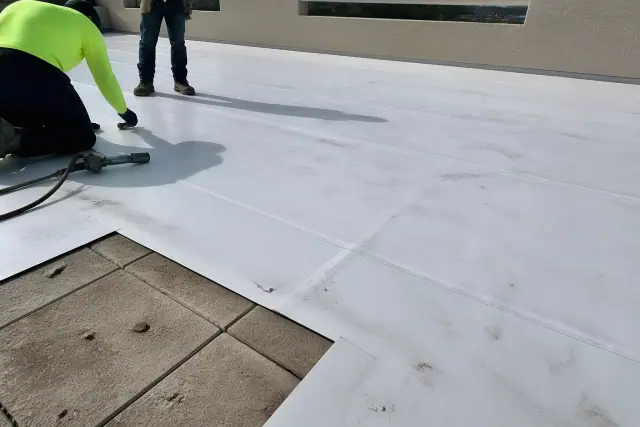
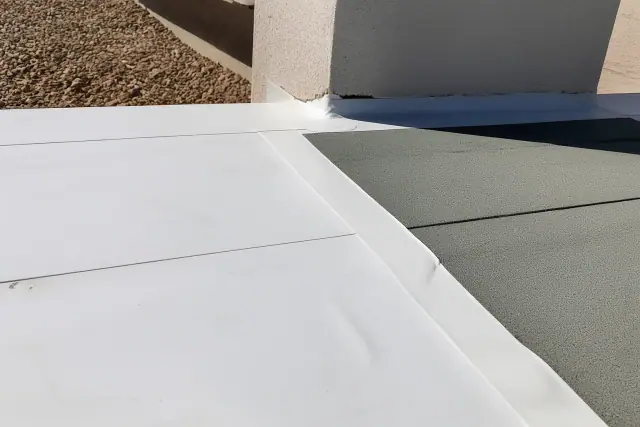
White TPO roofing membrane and granulated base sheet overlapping on a flat roof in Phoenix, AZ.

TPO Versus Other Roof Materials

Building use, roof traffic, existing structure, and budget determine whether TPO or another commercial roof material is the better fit. Arizona conditions generally reward reflective, UV-stable materials over systems designed primarily for wet or freeze-thaw climates.

  • TPO reflects UV exposure, while dark EPDM emphasizes cold-climate flexibility
  • Spray polyurethane foam can reduce cooling costs by up to 15 percent through its thermal properties
  • Built-up roofing withstands sustained heavy foot traffic better than TPO
  • Modified bitumen and metal are considered alongside reflective single-ply options
  • TPO's long-term result depends especially on seam welding and substrate preparation
Request Estimate
Finding Your Right Fit

Choosing a TPO Roofing Contractor

A Phoenix TPO project requires more than laying a white membrane over the roof. Look for TPO-specific training, controlled seam welding and testing, careful substrate evaluation, commercial licensing and insurance, and complete installation records.

TPO-Trained Installation Crews

Every installer on our team trains specifically in thermoplastic polyolefin application. Automated hot-air welders control seam temperature, and peel tests verify the seam before the crew advances to the next roof section.

Arizona Licensing and Insurance

We hold Arizona Registrar of Contractors licensing and carry the insurance coverage commercial property managers require before approving a project. Those qualifications support a more accountable installation process.

Documented Standards and Warranty Support

We follow manufacturer specifications and National Roofing Contractors Association guidance for fastening patterns, insulation layers, and drainage. Project documentation and warranty registration help keep the manufacturer's coverage valid.

What Sets Us Apart

Why Choose Us for TPO Roofing Installation?

Our process is built around the failure points that matter in Phoenix: trapped moisture, weak seams, poor drainage, and UV exposure. The installation record covers substrate inspection, each installation stage, and completed seam tests.

Request a Free Inspection

Seam Separation and Curling

Repeated heat cycling can loosen poorly welded seams, with curling edges often providing the first visible warning. Early repair can stop that opening from becoming a leak path into the building.

Punctures and Membrane Tears

HVAC service traffic, debris, hail, and monsoon-driven material can puncture or tear TPO. Heat-welded repair membrane restores the damaged area more durably under Phoenix UV exposure than an adhesive-only patch.

Standing Water and Poor Drainage

Standing water that remains longer than 48 hours accelerates membrane breakdown and stresses seams. Tapered insulation or additional drains can correct the drainage problem instead of hiding the symptom beneath a coating.

Trapped Moisture and Delamination

Installing over a wet or unsound substrate can trap moisture below the reflective membrane and accelerate deck deterioration. Moisture intrusion, delamination, and structural soundness must be evaluated before new sheets are placed.

Widespread Membrane Brittleness

Brittleness across the membrane or seam failure in several areas signals that the system may have moved beyond a contained repair. A full assessment distinguishes a practical localized fix from a roof that is ready for replacement.

Recurring Monsoon Leaks

Recurring leaks, bubbling, or renewed seam separation after a monsoon event call for a professional roof inspection. Evaluating the whole leak path can reveal drainage, flashing, or substrate conditions that another isolated patch would miss.

How it works

Our TPO Roofing Process

A reliable TPO system begins below the membrane and ends with tested seams and complete records. Our sequence covers deck inspection, insulation layout, membrane placement, seam welding, flashing and drainage details, and a documented final walk-through.

01.

Inspect the Roof Deck

We evaluate moisture intrusion, delamination, and structural soundness before laying membrane. The findings determine whether the existing roof can be recovered or requires tear-off and deck repair.

02.

Lay Out Insulation and Drainage

Rigid insulation is arranged for the specified R-value and a stable membrane substrate. Where drainage needs correction, tapered insulation or additional roof drains are incorporated into the plan.

03.

Place and Secure the Membrane

The selected TPO sheets are positioned across the insulation and secured according to manufacturer fastening requirements. Layout accounts for rooftop units, penetrations, edges, and planned seam locations.

04.

Hot-Air Weld the Seams

Automated hot-air welders fuse adjacent sheets at controlled temperatures. This creates continuous seams designed to be stronger than the surrounding membrane.

05.

Complete Flashing Details

Flashing is completed around rooftop equipment, penetrations, edges, and drains. These details close common leak paths and support drainage across the low-slope system.

06.

Test, Inspect, and Document

We run peel tests on the seams and complete a final walk-through inspection. Installation records support Phoenix building code inspection, owner documentation, and manufacturer warranty registration.

Plan Your Roof

Schedule a TPO Roofing
Inspection

Start with a free inspection of the membrane, substrate conditions, seams, flashing, drainage, and rooftop penetrations. We provide a written estimate so you can compare repair, recover, and replacement needs before work begins.

TPO Roofing Help

Phoenix TPO Roofing FAQs

These answers cover TPO costs, materials, installation choices, maintenance, and common problems for Phoenix commercial roofs. A roof inspection is the best way to match those general considerations to a specific building.

Call Our TPO Team

New TPO installation generally runs $5 to $9 per square foot, including materials, labor, and manufacturer warranty registration. Recover installation over a suitable existing roof typically runs $5 to $8 per square foot, while full tear-off and replacement runs $7 to $12 per square foot. Thickness, insulation, deck condition, penetrations, rooftop units, and access determine where a project falls within those ranges.

TPO is less resistant to sustained heavy foot traffic than built-up roofing, and poor seam welding can shorten its service life. It also has a shorter long-term track record than built-up roofing or modified bitumen. Careful substrate preparation, controlled welds, peel testing, and regular maintenance address the most common vulnerabilities.

Both are established single-ply systems, but TPO's reflective white surface better addresses Phoenix UV exposure and cooling loads. EPDM's dark rubber membrane is more suited to cold-climate flexibility than desert heat management. The building's roof traffic, structure, and budget still need to be considered.

TPO and spray polyurethane foam are two frequently recommended choices for Arizona commercial flat roofs. TPO reflects solar radiation, while spray foam provides thermal performance; the right choice depends on roof traffic, the existing structure, and budget. Modified bitumen, metal, and built-up roofing may also fit specific building conditions.

TPO is typically installed over rigid insulation board on the structural deck. A cover board may be placed between the insulation and membrane for added puncture resistance. Moisture testing and needed deck repairs should be completed before the insulation is installed.

The 25 percent rule refers to a code provision used in some jurisdictions: when more than 25 percent of a roof is replaced or recovered, the entire system may need to meet current code requirements. That can affect insulation R-values, drainage design, and wind-uplift ratings. The applicable obligations should be evaluated during inspection before repair or replacement is approved.

A properly installed TPO roof in the Phoenix metro typically delivers 18 to 22 years of service life. Well-maintained systems can reach the 20 to 30 year range. Seam quality, UV exposure, drainage, roof traffic, and documented maintenance all affect the outcome.

Membrane thickness is one of the major cost and system-selection factors for TPO roofing. The choice among 45-mil, 60-mil, and 80-mil depends on the roof assembly, building use, insulation needs, traffic, and warranty requirements. We install 60-mil and 80-mil TPO and review the full roof conditions before recommending a specification.

Automated hot-air welders fuse adjoining TPO sheets at controlled temperatures, producing seams designed to be stronger than the surrounding material. Our installers run peel tests on each seam before moving to the next section. Finished installation is documented for the building owner.

Yes, when the existing roof is dry and structurally sound, TPO can be recovered over it rather than torn off. We first inspect for moisture, delamination, and structural problems that should not be concealed. An eligible recover generally costs $5 to $8 per square foot and avoids tear-off and landfill fees.

Repair is practical when punctures, tears, seam openings, or leaks are localized and the surrounding assembly remains sound. Replacement becomes more appropriate when brittleness or seam failure has spread across several areas, moisture is concealed below the system, or the roof is beyond its design life. An inspection distinguishes contained damage from system-wide failure.

We recommend biannual TPO inspections, once before monsoon season and once after. Each visit should check seams, flashing, drainage, debris, membrane wear, and rooftop equipment penetrations. Keeping written maintenance records can also protect manufacturer warranty coverage.

Schedule an assessment for recurring leaks, bubbling, seam separation, curled edges, punctures, membrane tears, or standing water that remains longer than 48 hours. Problems that reappear after a monsoon can point to drainage, flashing, or substrate conditions beyond the visible damage. A whole-roof inspection helps identify the actual failure path.