Proudly serving Phoenix, Mesa, Scottsdale, Tempe, Chandler, Glendale & surrounding areasCall or Text 24/7: 480-319-7533
Aerial view of residential neighborhoods, desert foothills, and arterial roads in Phoenix, AZ during late afternoon.

Commercial Roofing, Flat Roof Repair, and System Maintenance in Glendale, AZ

Phoenix Commercial Roofing Company serves commercial property owners in Glendale, Arizona, with flat roof repair, roof replacement, and system-specific roofing work. Our crews install and repair TPO, spray foam, modified bitumen, built-up, coating, and metal roof assemblies for retail, industrial, medical, hospitality, and office properties. We also provide roof inspections and preventive maintenance for low-slope systems exposed to West Valley conditions.

Dark membrane surfaces on Glendale rooftops regularly climb past 160 degrees, while year-round UV exposure accelerates seam, flashing, and surfacing wear. Monsoon wind, sudden downpours, and debris at drains can turn small defects into active leaks and ponding water. As a licensed commercial roofer that is bonded and insured, we evaluate the existing assembly, document the failure point, and recommend system-matched work instead of a generic patch.

Glendale's population of roughly 248,325 supports a dense mix of commercial properties near Arrowhead Towne Center, the Loop 101 corridor, State Farm Stadium, and older downtown districts. Request a free roof estimate for a clear explanation of what your building needs.

★ ★ ★ ★ ★4.9/5 Customer Rating - 29 Years of Commercial Roofing Experience - Thousands of Roofs Serviced - Licensed, Bonded & Fully Insured - Serving Businesses & Property Managers
Commercial Roof Services

Commercial Roofing Services in Glendale, AZ

Different commercial buildings call for different roof systems, repair methods, and maintenance priorities. We match each recommendation to the roof's slope, structural load, drainage, existing materials, and the owner's budget. Property managers with nearby sites in Peoria, AZ can use the same system-by-system evaluation for those buildings.

Commercial Flat Roof Repair

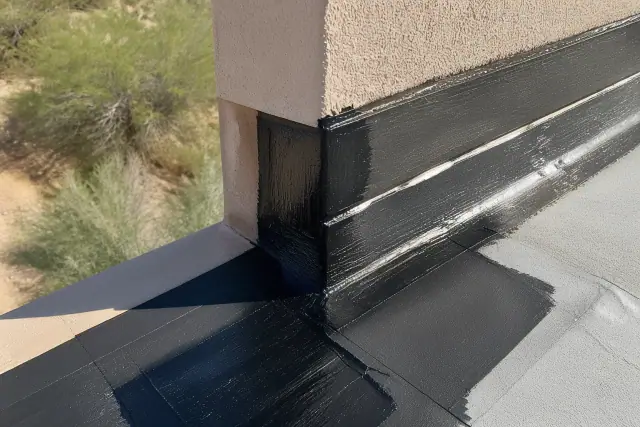
Flat roof membrane repair on a stucco parapet wall in Glendale, AZ with visible heat-applied sealant.

Flat-roof repairs begin with a visual survey and moisture scanning to find ponding, membrane splits, or failed flashing. Repairs typically cost $3 to $10 per square foot, depending on membrane damage and whether wet insulation must be removed, and we use materials matched to the existing system. Explore Service

Explore Service

Commercial Roof Replacement

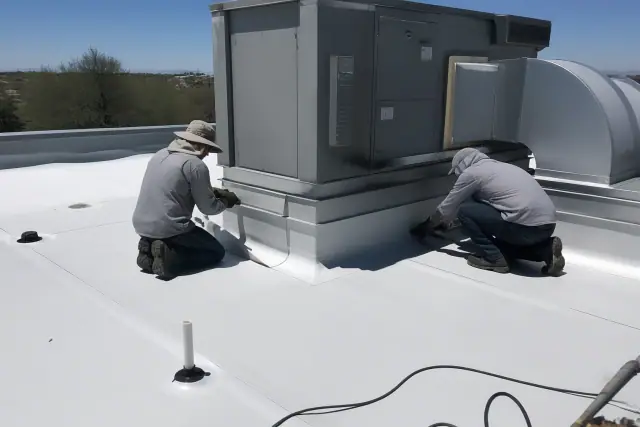
Technicians installing TPO membrane roofing around an HVAC unit on a commercial roof in Glendale, AZ.

Replacement is considered when deterioration extends beyond a durable repair or an existing assembly has reached the end of its service life. Full commercial roof replacement typically runs $5.50 to $12 per square foot on average, with labor accounting for about one-third to one-half of total project cost. We evaluate drainage and structural loading, prepare the written scope, and handle permits for replacement and major repair work. Explore Service

Explore Service

TPO Roofing

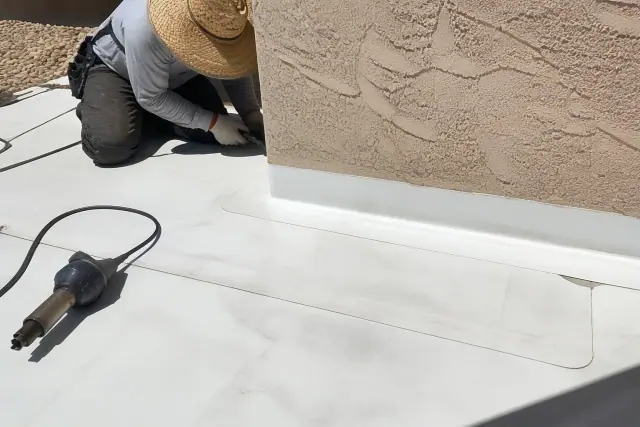
White TPO roofing membrane with heat-welded seams on a commercial flat roof in Glendale, AZ.

Reflective white TPO helps reduce rooftop heat gain and resists UV exposure on Glendale commercial buildings. We install 45, 60, and 80-mil membranes with heat-welded seams tested for pull strength, and repair existing roofs with matched membrane and proper seam welding. Installed TPO typically costs $4 to $7 per square foot. Explore Service

Explore Service

Spray Foam Roofing

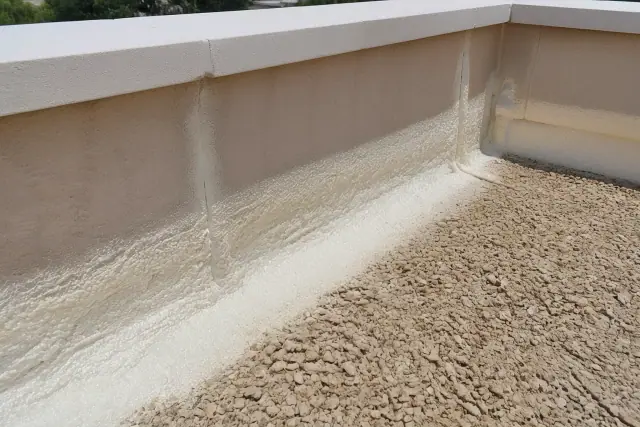
Spray foam insulation applied to a commercial parapet wall on a gravel roof in Glendale, AZ.

Spray polyurethane foam creates a fully adhered, seamless insulating layer without seams or fastener penetrations. We apply it at the manufacturer-specified thickness and protect it with an elastomeric silicone or acrylic coating for UV exposure and foot traffic. Recoating every 10 to 15 years can keep the system in service without a full tear-off while its added R-value helps reduce peak cooling loads.

Commercial Roof Coatings

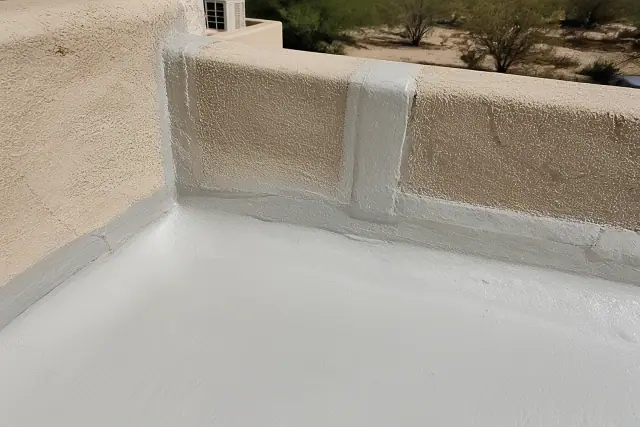
Liquid-applied roof coating applied to a parapet wall flashing at a commercial building in Glendale, AZ.

Silicone, acrylic, and elastomeric coatings can seal seams, restore reflectivity, and add a UV barrier when the underlying roof structure remains sound. We select the coating around the existing substrate and ponding conditions rather than applying one product to every roof. This approach can extend useful service life without the cost and disruption of full replacement.

Commercial Metal Roofing

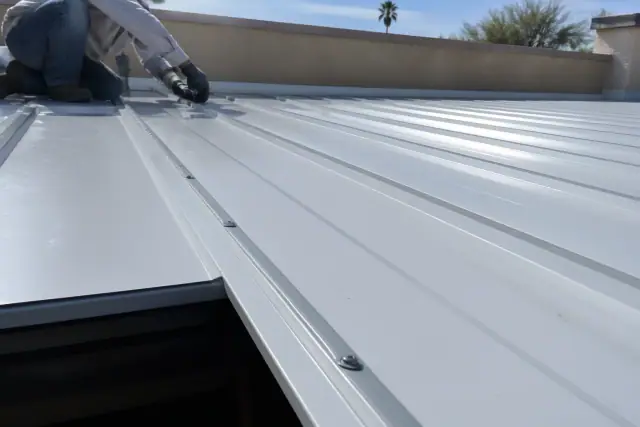
Industrial screws securing overlapping metal roofing panels on a commercial building in Glendale, AZ.

We install and repair standing-seam and screw-down metal panel systems, including recoating and re-fastening panels loosened by high winds. Commercial metal roofing typically costs $7 to $14 per square foot installed and can provide a 30 to 45 year service life. Its wind resistance and lower maintenance frequency can suit owners planning to hold a property for decades.

Modified Bitumen Roofing

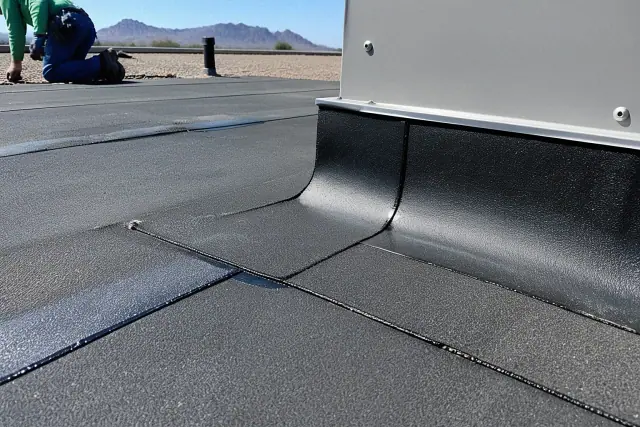
Modified bitumen roofing membrane with torch-applied seams and gravel ballast on a rooftop in Glendale, AZ.

Modified bitumen provides a durable, multi-ply surface for roofs with heavier foot traffic or rooftop equipment. We install torch-applied and cold-adhesive APP and SBS systems and repair blistering, granule loss, and open seams. Installed costs generally range from $4 to $8 per square foot, depending on ply count and cap-sheet selection.

Built-Up Roofing (BUR)

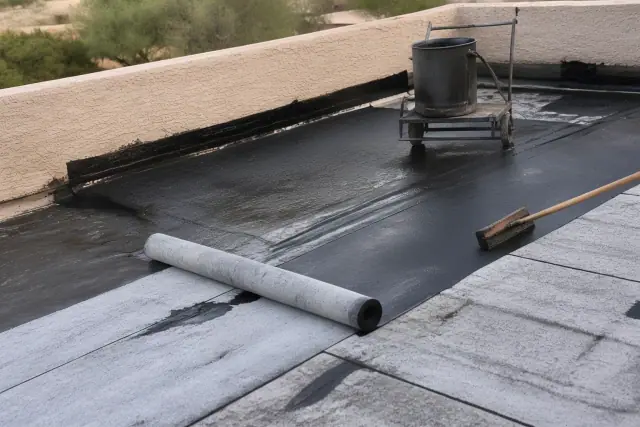
Built-up roofing with layered bitumen, felt plies, and a hot-mopping brush on a roof deck in Glendale, AZ.

Many older Glendale commercial buildings still use built-up roofing, and we match existing plies and gravel or cap-sheet surfacing when making repairs. A well-maintained BUR system can last 20 to 30 years. Regular coating and gravel maintenance protect the underlying layers from UV breakdown, while full replacement is available when the assembly has exceeded its service life.

Commercial Roof Inspections

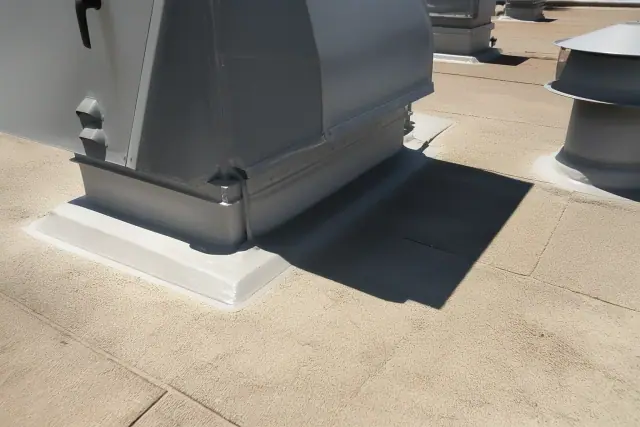
Liquid-applied sealant on a rooftop HVAC unit during a commercial roof inspection in Glendale, AZ.

A commercial roof inspection covers membrane condition, seams, flashing, drainage, insulation moisture, and rooftop equipment penetrations. We offer same-day inspections in Glendale for active leaks or storm damage in most cases and provide written reports with photos for transactions, lease renewals, insurance files, or maintenance planning. That assessment helps owners distinguish a roof with roughly 3 years of useful life from one with 15 years and plan capital work accordingly.

Commercial Roof Maintenance

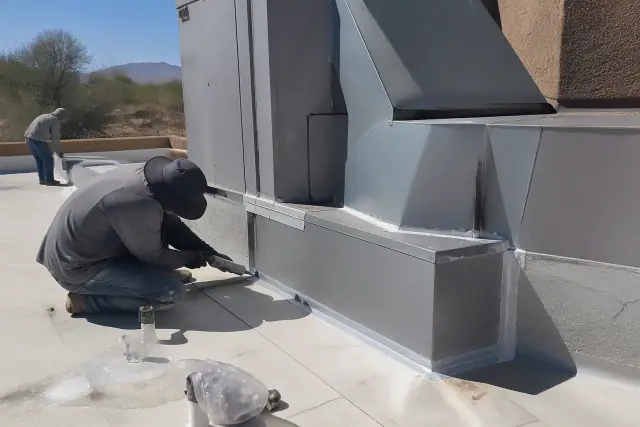
Roofing technicians applying sealant around a ventilation unit on a commercial roof in Glendale, AZ.

Maintenance programs typically schedule inspections twice yearly, before and after monsoon season, with additional checks after significant wind or hail. Visits include clearing drains and scuppers, resealing minor seam or flashing separation, checking coatings, and reviewing equipment curbs and penetrations. A proactive program can extend a commercial roof's service life by 15 years or more while building a documented history for budgeting, lease compliance, and insurance needs.

Roof System Selection

How to Choose a Commercial Roof for Glendale

The right commercial roof depends on more than a product name. Building slope, structural load, drainage, rooftop traffic, current assembly, budget, and ownership horizon all affect whether repair, coating, or replacement makes sense. We compare those conditions before recommending a material or scope.

Solar Reflectivity and UV Resistance

Dark roof membranes in Glendale routinely reach 150 to 160 degrees Fahrenheit under summer sun, and repeated heating and cooling stresses laps, seams, and flashing. Reflective TPO and properly maintained coatings can reduce surface heat gain, while coated spray foam adds insulation and shields the assembly from UV exposure.

Drainage and Ponding Risk

Flat roofs need clear drains, scuppers, and enough slope to move sudden monsoon rainfall. Water that remains on a membrane for more than 48 hours after a storm typically points to a drainage problem that needs correction rather than another surface patch.

Structural Load and Existing Assembly

A roof's deck, insulation, existing layers, and structural loading narrow the safe repair or replacement choices. Moisture scanning also matters because saturated insulation adds weight and must be removed before sound membrane work can be completed.

Rooftop Traffic and Equipment

Restaurants, medical offices, warehouses, and retail properties can place very different demands on a roof. Frequent service traffic and equipment curbs may favor puncture-resistant multi-ply materials, reinforced details, and carefully protected access paths.

Service Life and Ownership Plans

Owners planning to hold a building for decades may weigh long-life metal or a renewable spray foam system differently from an owner preparing for a transaction or near-term capital plan. The useful life of the current roof and the timing of future maintenance should be considered together.

Installed Cost and Maintenance Needs

Upfront price is only one part of commercial roof selection. Coating intervals, inspection needs, repairability, material availability, expected service life, and the risk of disrupting business operations all shape long-term value. A written, itemized estimate makes those tradeoffs easier to compare.

Glendale Roof Stressors

Common Flat-Roof Problems on Glendale Properties

Glendale's monsoon season runs roughly from mid-June through September, adding high winds, sudden downpours, and dust to a roof already stressed by intense sun. Drains can clog, membrane edges can lift, and concealed moisture can spread before an interior leak reveals the extent of damage. An inspection separates a localized repair from a drainage, insulation, or system-wide problem.

Request Roof Inspection

UV Breakdown and Thermal Cycling

Intense sunlight breaks down unprotected asphalt surfacing and neglected coatings, while daily expansion and contraction work at membrane laps and seams. Cracking, alligatoring, granule loss, and brittle edges indicate that UV exposure is advancing beyond normal surface weathering.

Ponding Water and Clogged Drainage

Dust, grit, and storm debris can obstruct drains and scuppers during a sudden downpour. Standing water accelerates membrane deterioration, adds dead load to the roof structure, and can expose weak seams or penetrations that stayed dry during lighter rain.

Flashing and Seam Separation

Parapet walls, membrane edges, equipment curbs, and other penetrations are frequent leak points when flashing pulls away or seams open. Thermal movement and wind can enlarge a small separation, so the repair must restore the detail with materials and procedures suited to the existing roof.

Monsoon Wind Uplift

High monsoon winds can loosen metal fasteners, lift flashing, or peel back an unsecured membrane edge. Emergency work first stops water intrusion with a temporary dry-in when needed, followed by a permanent repair after conditions allow safe rooftop access.

Wet Insulation and Hidden Moisture

Water trapped beneath a membrane may spread beyond the visible leak and cannot be corrected by covering the surface. Moisture detection helps define the affected area, and saturated insulation is cut out and replaced. If concealed deterioration appears after work begins, we stop and explain the added condition before proceeding.

Worn Coatings and Surfacing

Coating erosion, built-up roof gravel displacement, modified-bitumen granule loss, and blistering expose the assembly to faster UV damage. Inspection determines whether localized restoration, a compatible recoat, or more extensive membrane work is appropriate for the underlying roof.

Why Choose Us

Why Choose Phoenix Commercial Roofing Company in Glendale?

Our Glendale commercial roofing work is built around system-specific diagnosis, documented scopes, and clear communication when conditions change. Phoenix Commercial Roofing Company is licensed through the Arizona Registrar of Contractors, bonded, and insured for commercial roofing work. For replacement and significant structural repair, we also handle permitting through the City of Glendale Building Safety Division under the locally adopted and amended International Building Code.

System-Matched Roof Diagnostics

We identify the existing TPO, PVC, EPDM, modified bitumen, built-up, spray foam, coating, or metal assembly before specifying repairs. Visual review, moisture scanning, drainage checks, and careful inspection of flashing and penetrations help locate the failure point instead of hiding it under a generic patch.

Written Scope and Photo Documentation

Before work begins, we provide a written scope and cost estimate that explains what will be repaired and why. Photos and measurements document the starting condition, and final images support maintenance records or an insurance file after the work is complete.

Licensed, Bonded, and Insured

Current Arizona commercial roofing licensing requires ongoing bonding and insurance verification. That formal accountability is paired with crews familiar with low-slope systems on Glendale retail centers, offices, restaurants, medical properties, warehouses, and industrial buildings.

Documented Repair Process

Our Commercial Roof Repair Process in Glendale

Each project moves from inspection and moisture evaluation to a written scope, system-matched work, and final documentation. This sequence lets property owners understand the roof condition before authorizing repairs and creates a clear maintenance record after completion.

01.

Inspect the Entire Roof Surface

We walk the roof, review drainage points, and inspect seams, parapet flashing, membrane edges, equipment curbs, and penetrations. Photos and measurements establish where symptoms appear and how the roof is configured.

02.

Check for Trapped Moisture

Where trapped water is suspected, moisture detection equipment helps define wet areas beneath the surface. That information separates a localized membrane repair from work that also requires saturated insulation removal.

03.

Prepare the Written Scope

We explain the failure point, proposed materials, repair limits, and cost before work begins. The estimate gives the owner a clear basis for approval, budgeting, and any permit coordination required for larger work.

04.

Complete the System-Matched Repair

The crew mobilizes with materials matched to the existing membrane, cap sheet, built-up plies, foam coating, or metal flashing. Manufacturer-specified procedures are followed and, where applicable, the repair is installed to preserve an existing manufacturer warranty.

05.

Protect Operations and Clean Daily

Work areas are secured, rooftop equipment and HVAC units are protected, and debris is cleaned at the end of each workday. Scheduling can be coordinated around operating hours whenever possible to limit disruption to the business below.

06.

Document the Final Walk-Through

After the repair, we complete a final roof walk and photograph the finished work. The resulting documentation can be retained with maintenance, lease, transaction, or insurance records.

Practical Roof Outcomes

Commercial Roofing Outcomes for Glendale Businesses

Case Study 1: Active leak control: Emergency patching or tarping can stop immediate water intrusion, followed by a permanent system-matched repair when rooftop conditions are safe.

Case Study 2: Planned capital work: Inspection reports and tracked maintenance findings show how the roof is aging so owners can budget for coating or replacement before failure.

Case Study 3: Maintainable repairs: Compatible materials, protected work areas, and final photos create a repair that fits the existing assembly and a record the property team can retain.

Plan Your Roof Work

Schedule a Commercial
Roof
Inspection

Tell us whether you are dealing with an active leak, storm damage, an aging roof, or planned maintenance, and we will evaluate the right next step for your Glendale property. We provide free roof estimates and coordinate inspections, repairs, and maintenance around business operations whenever possible.

Commercial Roof Help

Commercial Roofing FAQs for Glendale, AZ

These answers cover roof systems, repair costs, inspections, maintenance, emergency response, and scheduling for Glendale commercial properties. A roof inspection is the best way to turn general guidance into a building-specific scope.

Call a Roofing Specialist

Yes. Phoenix Commercial Roofing Company provides commercial flat roof repair, replacement, TPO, spray foam, coatings, metal roofing, modified bitumen, BUR, inspections, and maintenance throughout Glendale and the surrounding Maricopa County area. We provide written estimates and documented inspection reports for the commercial projects we take on.

We repair TPO, PVC, EPDM, modified bitumen, built-up roofing, spray foam, and metal roof systems. Each assembly requires different materials and techniques, so we identify the existing roof and match the repair instead of relying on a generic patch.

Commercial roof repair generally ranges from $3 to $10 per square foot, depending on membrane damage, roof type, and whether wet insulation must be replaced. Full replacement typically averages $5.50 to $12 per square foot; TPO is roughly $4 to $7 per square foot, and metal roofing is roughly $7 to $14 per square foot. A written inspection-based estimate establishes the actual scope for the building.

No single system is best for every building. Reflective TPO and coated spray foam perform well against heat and UV exposure, while metal roofing offers a 30 to 45 year service life for long-term ownership. Slope, structural loading, drainage, budget, traffic, and the existing assembly determine the better fit.

Yes. Programs are typically built around inspections twice yearly, before and after monsoon season, with additional checks after significant wind or hail. Proactive maintenance can extend commercial roof service life by 15 years or more while creating records for budgeting, lease compliance, and insurance needs.

Yes. Inspections, repairs, and maintenance can be coordinated around operating hours whenever possible to reduce disruption. Many repairs remain confined to the roof, while active leaks and storm damage are prioritized to limit interior damage.

Standard seam, flashing, or localized membrane repairs are often completed within a single day. Work involving wet insulation removal or broader membrane replacement can take several days, depending on roof size, material availability, and dry weather. The written scope includes a project-specific time estimate before work begins.

Yes. We respond to active leaks, storm damage, and wind-driven membrane failures with temporary patching or tarping to stop water intrusion, then complete a permanent repair when safe rooftop access and dry conditions allow. Damage and repair work are documented for the property record.

Roof replacement and significant structural repair typically require a permit through the City of Glendale Building Safety Division. We handle permitting as part of replacement and major repair projects under the International Building Code as adopted and amended locally.

Water remaining on the membrane for more than 48 hours after a storm usually indicates a drainage problem that needs correction. Blocked drains, clogged scuppers, or inadequate slope can add structural load and accelerate membrane deterioration, so the cause should be inspected rather than covered with another patch.

A coating can extend service life when the underlying structure is sound but the surface is weathered. Silicone, acrylic, and elastomeric options seal seams, restore reflectivity, and add UV protection, with the right material selected for the existing substrate and ponding conditions.

The inspection reviews membrane condition, seams, flashing, drainage, insulation moisture, and rooftop equipment penetrations. Older built-up and modified bitumen roofs are also checked for blistering, alligatoring, and granule loss. The written report includes photos for maintenance planning, transactions, leases, or insurance records.

Where applicable, we use manufacturer-specified repair procedures intended to preserve an existing warranty rather than void it. That starts with identifying the roof system and using compatible membrane, cap-sheet, coating, or flashing materials.

Service covers Glendale and surrounding Maricopa County communities including Peoria, Phoenix, Sun City, Avondale, and Surprise. Within Glendale, work includes commercial districts near Catlin Court, Murphy Park, Westgate Entertainment District, State Farm Stadium, Arrowhead Towne Center, 59th Avenue, Bell Road, and the Loop 101 corridor.

We work on retail centers, industrial and warehouse buildings, medical offices, restaurants, hospitality properties, office parks, and commercial flex space. The repair or replacement scope is adjusted for each building's structural loading, drainage design, roof traffic, equipment, and operating needs.