Proudly serving Phoenix, Mesa, Scottsdale, Tempe, Chandler, Glendale & surrounding areasCall or Text 24/7: 480-319-7533
Aerial view of residential neighborhoods, desert foothills, and arterial roads in Phoenix, AZ during late afternoon.

Commercial Flat Roof Repair, Replacement, and Maintenance for Businesses in Chandler, AZ

Phoenix Commercial Roofing Company serves Chandler property owners and facility managers with commercial flat roof repair, roof replacement, and TPO roofing. Our commercial roofing work also includes spray foam roofing, roof coatings, metal roofing, modified bitumen, and built-up roofing. We inspect and maintain low-slope systems on office, industrial, warehouse, retail, and multi-tenant flex properties.

Dark membrane roof decks in Chandler routinely climb past 150 degrees Fahrenheit during summer, accelerating the effects of constant UV exposure and thermal cycling. Wind-driven monsoon rain then tests weakened seams, flashing, and drainage paths. Our approach centers on identifying the actual failure point and matching the work to the roof system and building conditions.

Our Chandler coverage includes Downtown, the Arizona Avenue and Price Road corridors, North Chandler near the Loop 202 and Loop 101 interchange, East Chandler, West Chandler, and surrounding Maricopa County communities named below.

★ ★ ★ ★ ★4.9/5 Customer Rating - 29 Years of Commercial Roofing Experience - Thousands of Roofs Serviced - Licensed, Bonded & Fully Insured - Serving Businesses & Property Managers
Commercial Roofing Services

Commercial Roofing Services in Chandler, AZ

We repair, replace, install, inspect, and maintain the low-slope roofing systems found across Chandler's older industrial parks and newer office campuses. Property teams managing facilities beyond Chandler can also review our commercial roofing information for Glendale, AZ .

Commercial Flat Roof Repair
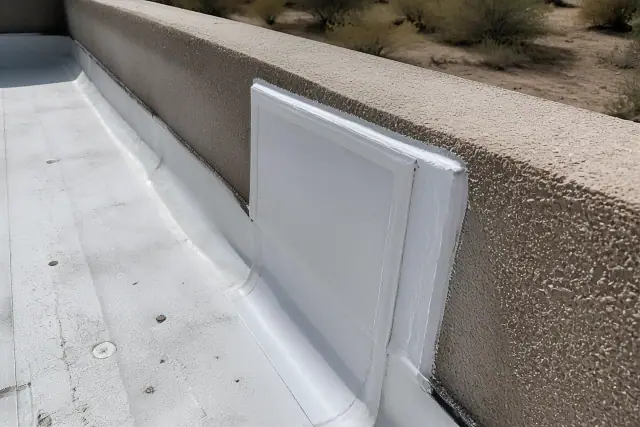
Flat roof membrane repair with sealed parapet wall flashing at a job site in Chandler, AZ.

We patch membrane splits, reseal flashing, reinforce opened seams, and use tapered insulation crickets to correct ponding. Small to moderate flat roof repairs typically run between $750 and $3,500, while extensive membrane, decking, or saturated-insulation work can cost more.

Explore Service
Commercial Roof Replacement

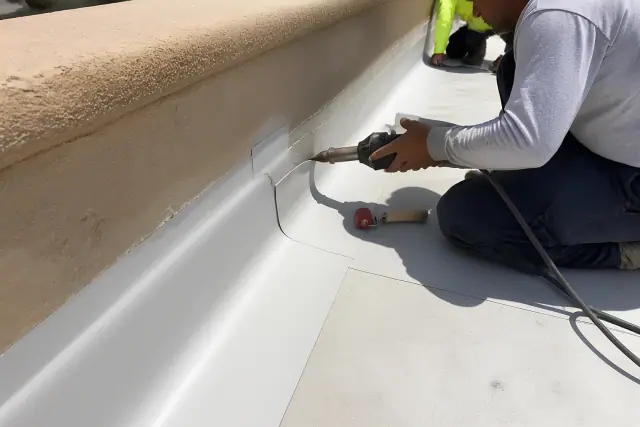
Roofing crew heat-welding TPO membrane seams on a stucco parapet wall during a commercial project in Chandler, AZ.

Commercial roof replacement becomes relevant when damage extends beyond an isolated repair, including widespread membrane failure, structural decking concerns, or saturated insulation. We evaluate those conditions before recommending the scope.

Explore Service

TPO Roofing

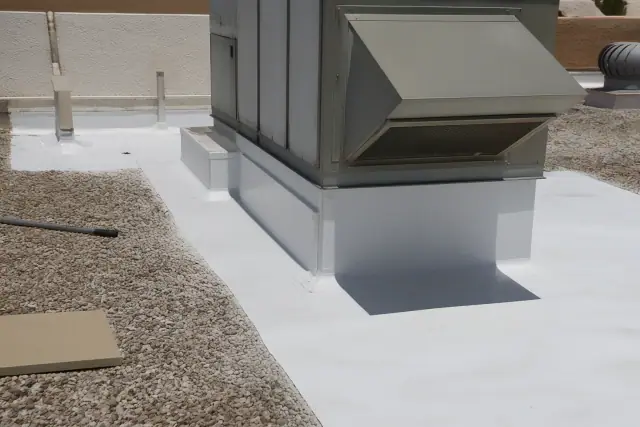
TPO roofing membrane detailing around a rooftop HVAC unit at a job site in Chandler, AZ.

Reflective white TPO is our most-installed single-ply system for Chandler commercial buildings. Installed cost typically runs $4 to $7 per square foot, and its heat-welded seams are tested to ASTM D6878.

Explore Service

Spray Foam Roofing

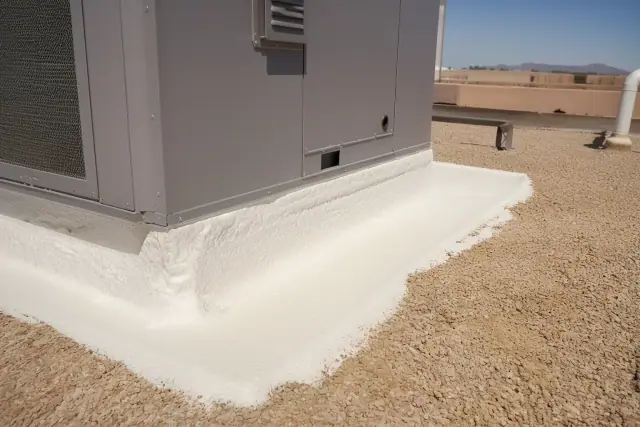
Spray foam roofing applied around a rooftop ventilation unit on a commercial building in Chandler, AZ.

Spray polyurethane foam forms a fully adhered, seamless insulating layer directly over a suitable existing substrate. It can renew weatherproofing and improve R-value on older BUR and metal roofs without a full tear-off.

Commercial Roof Coatings

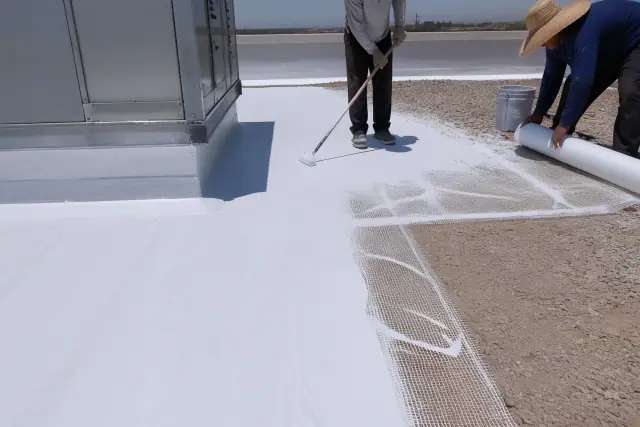
Reflective white roof coating application on a commercial building in Chandler, AZ.

Silicone and acrylic elastomeric coatings can extend roof life and lower surface temperature compared with an unprotected black membrane. Cool Roof Rating Council-rated coatings also support applicable reflectivity goals.

Commercial Metal Roofing

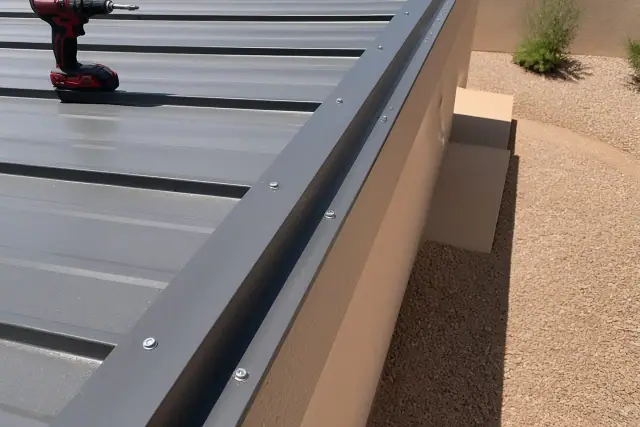
Installing metal roofing panels with industrial fasteners on a building in Chandler, AZ.

Standing seam metal roofing typically runs $7 to $14 per square foot installed and delivers a 30 to 45 year service life. That long horizon can suit warehouses and industrial buildings in South Chandler's manufacturing corridor.

Modified Bitumen Roofing

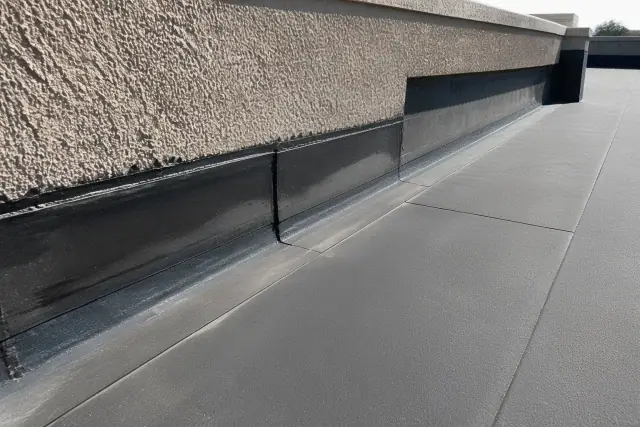
Modified bitumen roofing installation with smooth seams and sealant at a parapet wall in Chandler, AZ.

Two-ply and three-ply torch-down modified bitumen systems remain common on older Chandler retail strips and multi-tenant buildings. Their layered construction is suited to sustained heat and monsoon-season wind exposure.

Built-Up Roofing (BUR)

Built-up roofing installation showing bitumen layers and asphalt application at a jobsite in Chandler, AZ.

Built-up roofing remains part of Chandler's commercial roof inventory, particularly on industrial properties dating to the 1980s. We repair and maintain these layered roofs and evaluate them for compatible coating or spray foam options.

Commercial Roof Inspections

Technicians performing roof membrane detailing around an HVAC unit on a commercial building in Chandler, AZ.

Our commercial roof inspections pair visual evaluation with moisture scans to trace where water is entering. We check membrane seams, parapet-wall and equipment-curb flashing, drainage, blistering, and insulation conditions before cutting into the roof.

Commercial Roof Maintenance

Roof membrane sealant work around a ventilation unit on a gravel rooftop in Chandler, AZ.

Commercial roof maintenance focuses attention on seams, flashing, drainage, coatings, and other vulnerable areas before a small defect spreads. The work is matched to TPO, spray foam, metal, modified bitumen, BUR, or coated roof construction.

Roofing System Selection

Choosing the Right Commercial Roofing Approach

The right recommendation depends on the existing assembly, how the building is used, drainage performance, heat exposure, moisture conditions, and whether targeted repair or broader replacement is warranted. Installed cost matters, but so do weatherproofing, reflectivity, insulation, and expected service life.

Roof System Compatibility

TPO, spray foam, coatings, standing seam metal, modified bitumen, and BUR each respond differently to repair and restoration. Start with the current material and substrate so the proposed work fits the assembly.

Building Use and Exposure

A tech office, distribution warehouse, retail center, and multi-tenant flex building place different priorities on the roof. Rooftop equipment, interior inventory, and the consequences of water intrusion all inform the scope.

Drainage and Ponding

Persistent ponding points to a drainage or slope condition that a surface patch alone may not solve. Tapered insulation crickets can redirect water where the roof design and affected area support that correction.

UV and Thermal Cycling

Constant UV radiation and large temperature swings can age dark membranes and repeatedly stress seams. Reflective TPO and compatible elastomeric coatings address heat load differently from layered asphalt systems or metal.

Repair, Restore, or Replace

An isolated split or flashing defect may support a focused repair, while a sound older substrate may be a candidate for spray foam or coating. Extensive membrane failure, structural decking issues, or saturated insulation can point toward replacement.

Installed Cost and Service Life

Compare the immediate project scope with the expected useful life and maintenance needs of the selected material. This helps distinguish a lower-scope repair from a longer-horizon roof investment without treating unlike systems as interchangeable.

Chandler Roof Risks

Common Commercial Roof Problems

Chandler's Sonoran Desert heat, UV exposure, and monsoon rain often reveal problems at seams, flashing, drainage paths, and moisture-trapped areas. A visual inspection and moisture scan help separate the visible symptom from the actual entry point.

Request Roof Inspection

UV-Degraded Membrane Seams

Relentless sunlight can degrade exposed membrane and weaken seams. Repeated movement then opens small splits that wind-driven rain can exploit.

Ponding Water

Water that does not drain within the 48 hours required by most manufacturer specifications keeps seams and weak areas under prolonged exposure. Correcting the drainage path can be as important as sealing the immediate leak.

Cracked Flashing

Flashing at parapet walls and rooftop equipment curbs must accommodate movement while keeping transitions sealed. Cracks at these details create direct entry points even when the surrounding membrane appears intact.

Trapped Moisture Blisters

Moisture trapped beneath a roof surface can expand under extreme heat and form blisters. A moisture scan helps define the affected area before material is opened or replaced.

Wind-Driven Monsoon Rain

Monsoon rain can travel through weak seams and flashing rather than entering directly above an interior stain. Once inside a low-slope assembly, water can spread toward insulation, decking, inventory, and equipment.

Thermal Expansion and Contraction

A climate that can swing from freezing nights to 115-degree afternoons repeatedly moves roof materials and connections. Seams, penetrations, and transition details bear much of that stress.

Why Choose Us

Why Work With Our Chandler Roofing Team

Phoenix Commercial Roofing Company combines licensed, liability-covered work with Chandler-specific knowledge of low-slope systems and desert exposure. We diagnose the failure point, account for the existing assembly, and recommend work that addresses the underlying condition.

Licensed Arizona Contractor

We perform commercial roofing work within Arizona Registrar of Contractors requirements and carry full liability coverage. That foundation supports accountable work on occupied commercial and industrial properties.

Moisture Scan Diagnosis

We use moisture scans and visual inspection to locate where water is entering before cutting into the roof. This diagnostic focus helps distinguish an isolated defect from broader wet insulation or assembly damage.

System-Specific Roof Work

Our repair and maintenance work spans TPO, spray foam, coatings, metal, modified bitumen, and BUR. Recommendations reflect how each system handles seams, adhesion, heat, moisture, and movement.

Inspection to Recommendation

Our Commercial Roof Evaluation Process

A useful roofing scope begins with the building, existing system, and reported symptoms, then moves through visual and moisture evaluation. The goal is to find the actual failure point and determine whether repair, restoration, maintenance, or replacement fits the conditions.

01.

Identify the Roof System

We begin with the existing roof type, substrate, building use, and reported leak or performance concern. These details frame which repair and restoration methods are compatible.

02.

Inspect Vulnerable Details

Visual inspection focuses on membrane seams, parapet-wall flashing, rooftop equipment curbs, drainage areas, splits, and blisters. We look beyond the interior stain for the roof-level entry point.

03.

Scan for Trapped Moisture

Moisture scanning helps reveal water that has migrated beneath the visible surface. The findings can clarify whether insulation saturation is localized or more extensive.

04.

Trace the Failure Point

We connect surface conditions, moisture findings, and drainage behavior to diagnose the underlying failure. This avoids treating a symptom as though it were necessarily the source.

05.

Match the Corrective Work

The condition may call for a membrane patch, flashing reseal, reinforced seam, tapered insulation cricket, coating, spray foam restoration, or broader replacement. The selected method must fit the existing assembly.

06.

Define the Project Scope

The final scope accounts for affected membrane, insulation, decking, flashing, and drainage components. It also distinguishes immediate repair needs from longer-term maintenance or replacement considerations.

Property-Focused Outcomes

Roofing Priorities Across Chandler Properties

Case Study 1: Office and Tech Campuses: Reflective TPO, coatings, and carefully sealed rooftop equipment curbs address heat load and the many transitions found on active office facilities.

Case Study 2: Warehouses and Industrial Buildings: Standing seam metal, spray foam, and low-slope repair options support large commercial roof areas where water intrusion can threaten inventory or equipment.

Case Study 3: Retail and Multi-Tenant Properties: Modified bitumen, BUR, coatings, and targeted flashing repairs address the layered systems commonly found on older retail strips and flex buildings.

Plan Your Roof Work

Schedule a Commercial Roofing Consultation

Tell us about the roof system, building type, and symptoms you are seeing. Phoenix Commercial Roofing Company can inspect the conditions and develop an estimate for the repair, restoration, maintenance, or replacement scope that fits the property.

Commercial Roofing Help

FAQs About Commercial Roofing in Chandler, AZ

These answers cover the roof systems, failure patterns, inspection methods, and cost factors described for Chandler commercial properties. A site-specific evaluation is needed to identify the source and scope of an individual roof problem.

Call Our Roofers

Common indicators include UV-degraded or opened seams, ponding water, cracked flashing at parapets or equipment curbs, membrane splits, and blisters caused by trapped moisture. Interior water intrusion may appear away from the actual roof entry point, so inspection should trace the source.

A small to moderate flat roof issue typically runs between $750 and $3,500. Larger work involving extensive membrane replacement, structural decking, or saturated insulation can run well beyond that range.

Yes. Emergency commercial roof repair is available when monsoon damage or sudden membrane failure threatens a building's interior, inventory, or equipment.

Most manufacturer specifications require ponding water to drain within 48 hours. Water that remains longer calls for evaluation of drains, slope, seams, and possible corrective measures such as tapered insulation crickets.

We install, repair, and maintain TPO, spray polyurethane foam, silicone and acrylic elastomeric coatings, standing seam metal, modified bitumen, and built-up roofing. We also provide commercial flat roof repair, roof replacement, inspections, and maintenance.

TPO roofing typically runs $4 to $7 per square foot installed. Its reflective white surface is well suited to Chandler heat, while project conditions determine the final scope.

The TPO systems described here use heat-welded seams tested to ASTM D6878. Those seams provide a stronger bond than adhered or mechanically fastened alternatives.

Spray polyurethane foam can be applied directly over a suitable existing substrate to create a fully adhered, seamless insulating layer. It can renew weatherproofing and improve R-value on older BUR and metal roofs without a full tear-off.

Silicone and acrylic elastomeric coatings can extend roof life and reduce surface temperature compared with an unprotected black membrane. Cool Roof Rating Council-rated options can help a building meet applicable reflectivity standards.

Standing seam metal roofing typically runs $7 to $14 per square foot installed and delivers a 30 to 45 year service life. That combination makes it a long-term option for warehouses and industrial buildings.

Two-ply and three-ply torch-down modified bitumen systems hold up under sustained heat and the wind exposure associated with monsoon season. They remain common on older retail strips and multi-tenant properties in Chandler.

We combine visual inspection with moisture scans to trace where water is entering before cutting into the roof. The evaluation covers seams, flashing, drainage, blisters, insulation conditions, and the way water may have migrated through the assembly.

We work on office buildings, tech and manufacturing campuses, distribution warehouses, retail centers, industrial properties, and multi-tenant flex buildings. Chandler coverage includes Downtown, the Arizona Avenue and Price Road corridors, North, East, West, and South Chandler.

Dark membrane surfaces can push past 150 degrees Fahrenheit in summer, while local temperature swings repeatedly expand and contract roof materials. Combined with constant UV radiation, that movement accelerates stress at seams, flashing, and penetrations.

A focused repair may fit an isolated split, open seam, or flashing defect. Extensive membrane failure, structural decking problems, or widespread insulation saturation can make broader replacement the more appropriate scope after inspection.