Proudly serving Phoenix, Mesa, Scottsdale, Tempe, Chandler, Glendale & surrounding areasCall or Text 24/7: 480-319-7533
Aerial view of residential neighborhoods, desert foothills, and arterial roads in Phoenix, AZ during late afternoon.

Commercial Flat Roof Repair, Replacement, and Restoration Services in Gilbert, AZ

Phoenix Commercial Roofing Company provides commercial flat roof repair, roof replacement, TPO roofing, and spray foam roofing for businesses in Gilbert, Arizona. We also work with coatings, metal roofing, modified bitumen, and built-up roofing systems. Our commercial services include inspections and ongoing maintenance for low-slope roofs. Every recommendation starts with the existing roof assembly, damage, and operating needs of the property.

Gilbert roofs face triple-digit summer heat, intense UV exposure, monsoon downpours, wind, hail, and dust accumulation. Those conditions can weaken seams, flashing, fasteners, drainage paths, and unprotected surfaces. Licensed Arizona commercial roofers assess the cause before recommending a system-matched repair or replacement. Photo documentation, a written scope, and a clear estimate help property teams make informed decisions without guessing.

Gilbert had a 2025 population of 287,285 and ranked as Arizona's fourth-most populous municipality. Its commercial inventory ranges from newer single-ply roofs around San Tan Village to older strip centers and warehouses nearing the end of their original roof system's service life.

★ ★ ★ ★ ★4.9/5 Customer Rating - 29 Years of Commercial Roofing Experience - Thousands of Roofs Serviced - Licensed, Bonded & Fully Insured - Serving Businesses & Property Managers
Complete Roofing Services

Commercial Roofing Services in Gilbert, AZ

Gilbert commercial roofs range from newer TPO and PVC systems to older BUR and modified bitumen assemblies, so service selection starts with the existing roof. Coverage spans Downtown Gilbert and the Heritage District, San Tan Village, the Santan Freeway corridor, the Gilbert Municipal Airport industrial area, Val Vista Lakes, Power Ranch, Morrison Ranch, Layton Lakes, Seville, Higley Groves, and commercial zones along Val Vista Drive, Baseline Road, Warner Road, and Williams Field Road. Crews also serve Mesa, Chandler, Queen Creek, Tempe, and commercial jobs throughout Maricopa County. Readers planning work in another Arizona market can review the site's roofing information for Goodyear, AZ while using the condition-based services below to compare needs.

Commercial Flat Roof Repair

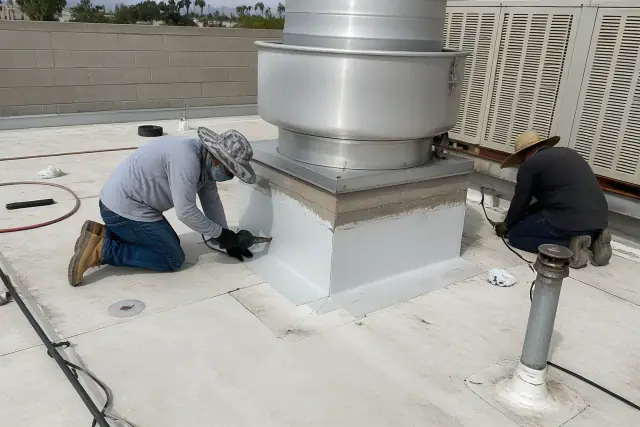
Technicians repairing a flat roof with heat-welded TPO membrane around a ventilation unit in Gilbert, AZ.

Commercial flat roof repair starts by tracing leaks to UV-degraded membrane seams, ponding water, storm damage, flashing, or penetrations. When needed, moisture scans help identify concealed wet areas before a repair is made with material compatible with the existing system. Repair costs typically run $3 to $10 per square foot, with the final scope driven by damage extent and roof type.

Explore Service

Commercial Roof Replacement

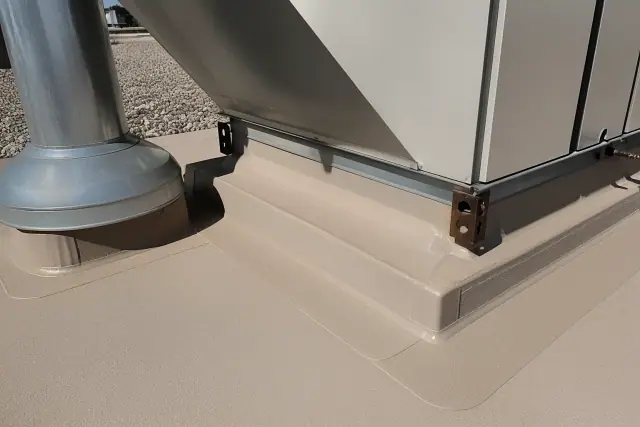
Commercial roof membrane detailing around an HVAC unit on a gravel rooftop in Gilbert, AZ.

When repair spending begins to approach replacement cost or the roof has exceeded its service life, replacement can be the stronger long-term choice. Work can include tear-off, deck inspection and repair, and a new system designed around heat load and monsoon wind uplift. Replacement generally runs $5.50 to $12.00 per square foot; single-ply systems and BUR can sometimes reach $11 to $14 per square foot installed, depending on material, size, and complexity.

Explore Service

TPO Roofing

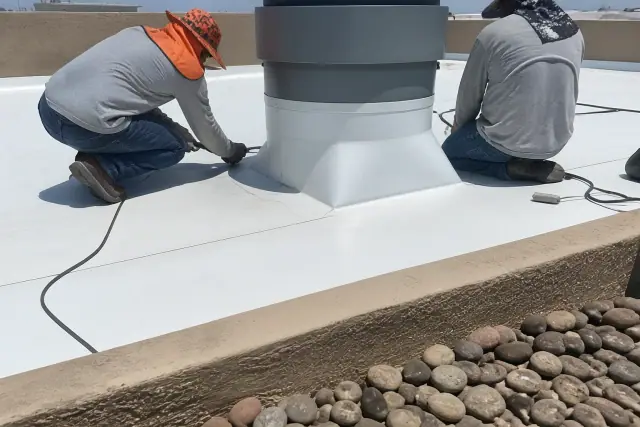
TPO roofing membrane with heat-welded seams on a commercial roof in Gilbert, AZ, framed by river rock and a stucco parapet.

TPO's reflective white surface reduces heat absorption, while hot-air-welded seams form a monolithic connection instead of an adhesive-only splice. Installed costs typically run $4 to $7 per square foot, and a properly installed TPO system can perform for 20 to 30 years with routine maintenance. Correct seam work matters when roof deck temperatures remain well above 150 degrees for months at a time.

Explore Service

Spray Foam Roofing

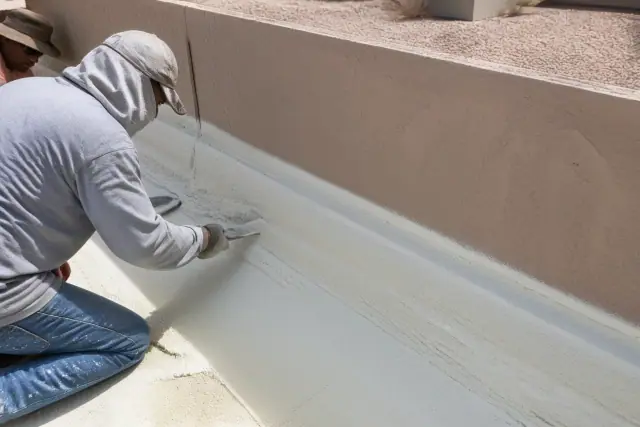
Spray foam insulation applied to a commercial parapet wall and roof transition in Gilbert, AZ.

Closed-cell spray polyurethane foam creates a seamless surface, self-flashes around penetrations, and adds insulation directly to the roof assembly. A protective elastomeric topcoat reflects UV and guards against the granular degradation that unprotected foam can experience. When the assembly remains suitable, foam roofs can be maintained and recoated over time instead of being fully replaced.

Commercial Roof Coatings

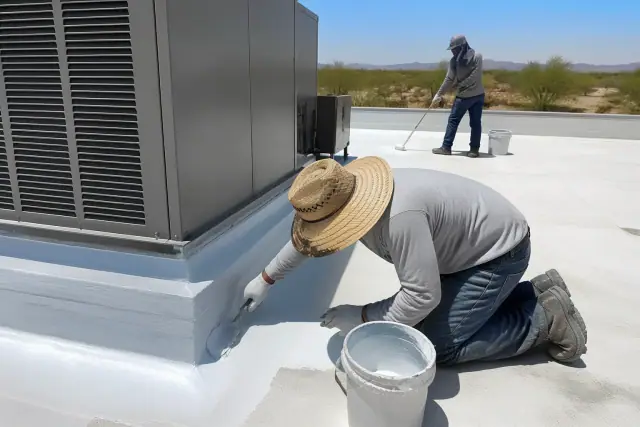
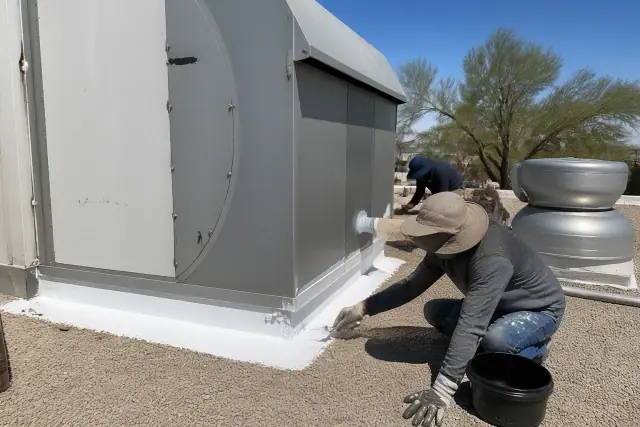
Commercial roof coating applied around a rooftop HVAC unit in Gilbert, AZ, under a clear blue sky.

Elastomeric and silicone coatings can restore waterproofing on compatible membrane, metal, or foam roofs while sealing minor cracks and seams. A coating application typically provides 5 to 10 years of restored performance, depending on the product and existing substrate condition. A thorough deck and membrane inspection is essential because coating over a compromised roof only delays the larger problem.

Commercial Metal Roofing

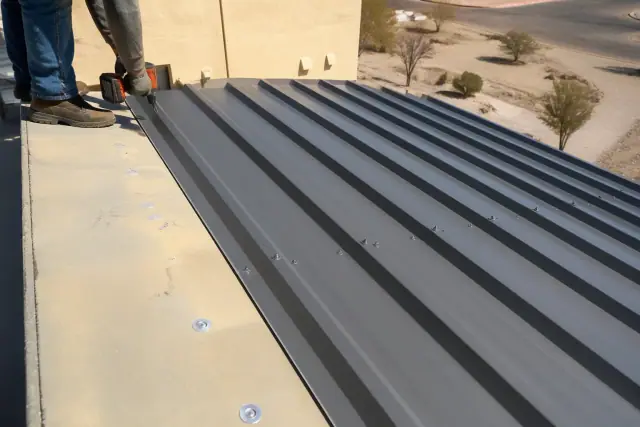
Commercial metal roofing installation with fastened overlapping steel panels at a job site in Gilbert, AZ.

Standing-seam and structural metal roofing can serve warehouses, agricultural buildings, and larger retail properties for 30 to 45 years when properly installed and maintained. Installed costs generally run $7 to $14 per square foot. Seam sealing, panel replacement, fastener maintenance, and reflective coatings address the thermal expansion and cooling-load concerns common in Gilbert.

Modified Bitumen Roofing

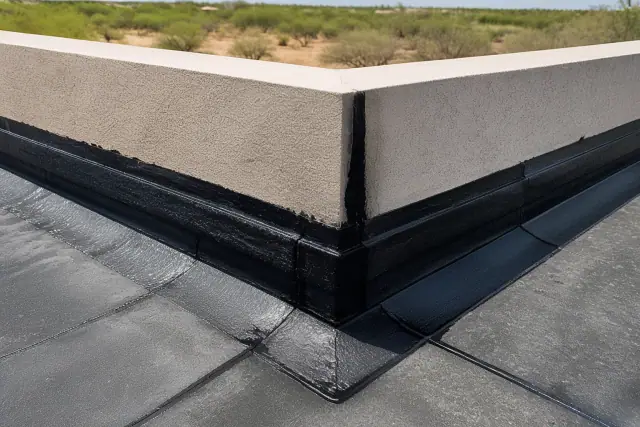
Close-up of a modified bitumen commercial roof installation on a stucco parapet wall in Gilbert, AZ.

Modified bitumen is a proven option for older commercial buildings with asphalt-based roof assemblies. Installation may be torch-applied, self-adhered, or hot-mopped according to fire-code requirements and the existing roof. Its resistance to foot traffic and mechanical damage suits buildings with frequent rooftop HVAC service, and a properly installed and maintained system typically performs for 15 to 20 years.

Built-Up Roofing (BUR)

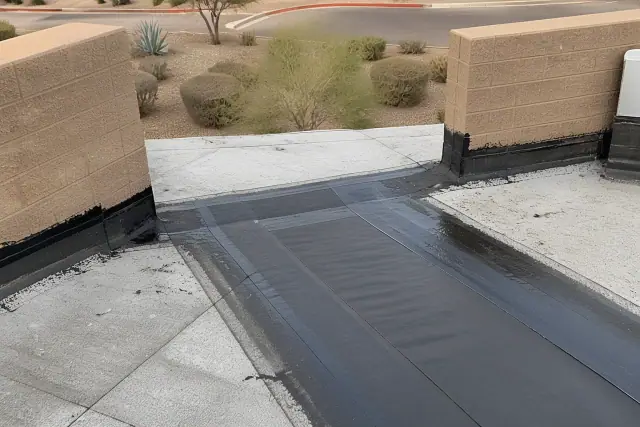
Expansion joint repair on a commercial built-up roof in Gilbert, AZ.

Built-up roofing uses multiple asphalt and gravel plies to create a durable low-slope assembly. Installed cost is roughly $11 per square foot and up, depending on the number of plies specified. Careful attention to ballast and flashing details helps a maintained BUR system reach a 20- to 30-year service life.

Commercial Roof Inspections

Technicians applying liquid flashing to a rooftop HVAC unit during a commercial roof inspection in Gilbert, AZ.

Commercial roof inspections cover the membrane, flashing, drains, penetrations, and rooftop equipment curbs, with findings documented in photos and a written report. Lifted seams, cracked pitch pans, and ponding near drains are easier to correct before water reaches the building interior. At least two inspections per year are recommended for most flat roofs in Gilbert, especially around the monsoon and summer heat cycles.

Commercial Roof Maintenance

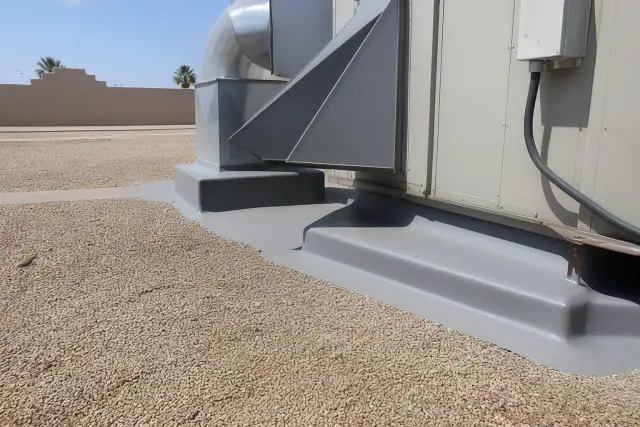
Fresh grey elastomeric coating applied around a rooftop HVAC unit at a commercial building in Gilbert, AZ.

A maintenance visit can include debris removal, drain and scupper clearing, seam and flashing checks, and minor repairs before they escalate. A structured program can help a commercial flat roof achieve its full 20- to 30-year lifespan rather than require premature replacement. Visit frequency should reflect the roof type, age, condition, and rooftop equipment load.

Roof Selection Factors

How to Choose a Commercial Roof in Gilbert

The right roof plan balances current condition, climate exposure, drainage, rooftop activity, expected service life, budget, and operational needs. A material that works well on one Gilbert warehouse may not fit a retail center with different penetrations, traffic, or cooling demands. Compare the following factors before choosing a repair, coating, retrofit, or full replacement.

Existing Roof Condition and Damage

Start with the existing membrane or metal assembly, its age, and the location and extent of damage. An isolated compatible repair may make sense when the surrounding roof remains sound, while repeated leaks, concealed moisture, or deck deterioration can point toward replacement. A full assessment keeps the visible interior stain from being mistaken for the actual entry point.

Heat and UV Performance

Roof-deck surface temperatures regularly exceed 160 degrees during Gilbert summers, accelerating asphalt breakdown and stressing seams. Reflective TPO and PVC surfaces, protected spray foam, and compatible reflective coatings can reduce heat absorption. Selection should account for the building's cooling load as well as the roof material's response to intense UV.

Drainage and Monsoon Exposure

Monsoon season typically runs from mid-June through September, bringing short, intense downpours that reveal inadequate slope and blocked drainage quickly. Inspect positive drainage, insulation crickets, scuppers, and drains before selecting a repair method. A watertight membrane still needs a clear path for water to leave the roof.

Rooftop Traffic and Equipment

Frequent HVAC service puts foot traffic and mechanical stress around equipment curbs, pitch pans, and access paths. Modified bitumen can be useful where resistance to traffic and mechanical damage is important, while every system needs correctly detailed penetrations. The roof plan should reflect how technicians actually move across and service the building.

Service Life and Maintenance

Arizona commercial flat roofs generally last 15 to 30 years, depending on material and maintenance history. Documented inspections, drain clearing, seam checks, and timely minor repairs help the assembly reach the upper end of its expected window. Material choice should include the future inspection and recoating work needed to preserve performance.

Cost and Operational Fit

Compare initial installation cost with expected maintenance, recoating options, service window, and disruption to building operations. A coating can extend a compatible roof without full replacement, while broader deterioration may justify tear-off and deck work. Larger projects can be sequenced and staged around business hours where feasible.

Desert Roof Problems

Common Commercial Roof Problems in Gilbert

Heat, UV, rapid temperature changes, monsoon storms, and airborne dust create overlapping failure modes on Gilbert commercial roofs. A leak may begin at a seam, edge, drain, penetration, fastener, or flashing detail far from the interior stain. Identifying the cause before making a repair prevents a surface patch from masking a larger drainage or assembly problem.

Request Roof Inspection

UV-Degraded Seams and Surfaces

Sustained triple-digit heat and strong UV exposure can age unprotected roofing, weaken membrane seams, and accelerate asphalt-based surface breakdown. Coatings may soften when improperly cured, while exposed materials can become brittle or granular. Inspection should distinguish surface weathering from a seam or substrate failure that needs repair.

Ponding Water and Blocked Drainage

Fast-moving storms can overwhelm poor slope, while dust and rooftop debris collect in drains and scuppers. Water that remains near a weak seam, flashing detail, or drain can eventually enter the assembly. Clearing drainage and correcting the vulnerable detail addresses more than the visible puddle.

Thermal Expansion Stress

Commercial roofs heat sharply during the day and cool after sunset, creating repeated expansion and contraction. That movement stresses membrane seams, metal panels, flashings, and fasteners. Repairs must allow for the existing material's movement instead of locking a flexible assembly under a rigid, mismatched patch.

Monsoon Wind and Hail Damage

Monsoon gusts can lift loose membrane edges and flashing, while hail can damage exposed roof surfaces. Heavy rainfall then exploits openings that may not have leaked during dry weather. Prompt assessment of storm damage helps protect inventory, equipment, electrical systems, and the roof deck from spreading water intrusion.

Flashing and Penetration Leaks

Pitch pans, pipe penetrations, wall transitions, parapets, and HVAC equipment curbs are common leak paths on low-slope roofs. Failed sealant or flashing can admit water well away from the interior symptom. Physical inspection and moisture tracing help locate the entry point before compatible flashing repairs are specified.

Aging Roof Assemblies

Gilbert's older commercial stock includes built-up roofs around 20 years old alongside newer single-ply systems. Roofs approaching 15 years of age benefit from more frequent checks, especially when they also carry heavy foot traffic or rooftop HVAC equipment. Condition, repair history, and remaining service life should guide whether to maintain, restore, or replace the assembly.

Why Choose Us

Why Gilbert Businesses Choose Phoenix Commercial Roofing Company

Commercial and industrial low-slope roofing requires different diagnostics, materials, drainage details, and job planning than residential shingle work. Phoenix Commercial Roofing Company combines desert-specific system knowledge with documented assessments and commercial scheduling. That focus helps property managers understand the cause, options, and operational impact before authorizing work.

Commercial System Specialization

Crews are trained across TPO, PVC, EPDM, modified bitumen, BUR, spray foam, and metal systems instead of treating flat roofing as an add-on. The company is a licensed Arizona commercial roofer with manufacturer training for warranty-compliant installation and repair, and it carries general liability and workers' compensation coverage for commercial work.

Documented Roof Assessments

A site assessment traces the failure instead of relying on the first visible symptom. Photos, moisture scans when needed, a written scope, and an itemized estimate make the recommendation easier to verify. If additional deck damage or an original-installation warranty issue appears, it is flagged for approval before work proceeds.

Local Permitting and Coordination

Required permits are coordinated through the Town of Gilbert Building Division, with attention to Maricopa County Air Quality Department requirements for torch-applied and hot-asphalt work. Materials and work areas can be staged to keep as much of the building operational as possible. Clear scheduling is especially important for retail centers, warehouses, offices, and multi-tenant properties.

A Clear Repair Process

Our Commercial Roof Repair Process in Gilbert

Each project follows a condition-first path from roof access and diagnosis through scope approval, scheduling, repair, and final review. The process is designed to identify why the roof failed and match the work to the existing assembly. Property teams receive clear documentation and a chance to review completed work.

01.

On-Site Roof Assessment

The visit begins by walking the roof and reviewing the membrane, metal panels, drains, flashing, penetrations, equipment curbs, and visible interior symptoms. Roof type, age, access, and operating conditions are noted before a solution is proposed.

02.

Leak and Moisture Diagnosis

The team traces the actual entry point rather than patching directly above a ceiling stain. Physical testing and moisture scans are used where needed to distinguish an isolated seam or flashing failure from concealed, broader deterioration.

03.

Photos, Scope, and Estimate

Findings are documented with photos and translated into a written scope and cost estimate. The explanation covers the failure cause, repair-versus-replacement reasoning, proposed materials, access needs, and likely impact on building operations.

04.

Repair Plan and Approval

Compatible repair materials or an appropriate replacement assembly are selected for the existing roof and Gilbert exposure. Required permits are addressed, and any newly uncovered deck damage or warranty concern is presented for sign-off before the scope changes.

05.

Scheduled Commercial Roof Work

Most straightforward flat roof repairs can be scheduled and completed within a day or two of approval. Larger repairs or partial re-roofing are staged around business hours where feasible so more of the building can remain operational.

06.

Final Walkthrough

After the repair, the completed area and related details are reviewed in a final walkthrough. The property representative can see what was done, compare it with the approved scope, and ask questions before the job is considered complete.

Expected Service Outcomes

Practical Roofing Outcomes for Gilbert Properties

Case Study 1: Leak Control: A condition-matched repair addresses the failed seam, flashing, penetration, or storm-damaged area instead of covering the interior symptom.

Case Study 2: Drainage Readiness: Cleared drains and scuppers, corrected vulnerable details, and planned inspections help the roof handle concentrated monsoon rainfall.

Case Study 3: Service-Life Planning: Written findings help owners decide when maintenance, recoating, repair, or replacement best fits the roof condition and capital plan.

Plan Your Roof Work

Schedule a Commercial
Roof
Assessment

Request a Gilbert commercial roof assessment to document current conditions and compare repair, replacement, coating, or maintenance options. Inspections can typically be scheduled within a few business days, with same-day evaluations often available for active leaks or storm damage. Call to discuss the building, roof system, visible symptoms, and access needs.

Roofing Answers

Commercial Roofing FAQs for Gilbert, AZ

These answers cover common Gilbert questions about flat roof repair costs, material choices, inspections, storm damage, service life, and contractor evaluation. A roof assessment is still needed to connect general guidance to a specific commercial building.

Call a Roofing Expert

Commercial flat roof repair generally ranges from $3 to $10 per square foot, depending on damage, material, and access. Labor typically represents one-third to one-half of the total repair cost, with materials and equipment making up the balance. An on-site inspection is needed for a written scope and estimate.

The 25% rule is a common code provision under which repairing or replacing more than 25% of a roof surface within the applicable period may require the broader roof system to meet current code. That can affect insulation, drainage, and material requirements. A full-roof assessment helps identify the implications before a repair scope is approved.

Arizona commercial flat roofs generally last 15 to 30 years, depending on material and maintenance. TPO and PVC often reach 20 to 30 years, modified bitumen typically lasts 15 to 20 years, and maintained BUR can reach 20 to 30 years. Intense UV and heat can shorten those windows when inspections and repairs are neglected.

Ask for a documented inspection, a clear explanation of the failure, proof of active Arizona licensing and insurance, and an itemized written estimate. A contractor should be able to explain why a material fits the existing assembly and provide references from comparable commercial work. Be cautious of pressure to sign immediately without a documented roof assessment.

Reflective TPO and PVC membranes can reduce heat absorption, while coated spray foam adds insulation and forms a seamless surface. Modified bitumen and BUR remain useful for compatible asphalt-based retrofits, and metal can provide a long service window on suitable buildings. The right choice depends on the existing structure, HVAC load, traffic, drainage, and budget.

Most Gilbert commercial roofs should be inspected at least twice per year, ideally before monsoon season and again after it ends. Roofs approaching 15 years of age, roofs with heavy foot traffic, and buildings with substantial rooftop HVAC equipment may need more frequent checks. A consistent record also supports maintenance and capital planning.

Active water intrusion, visible ceiling staining, or storm damage that prevents the roof from shedding water calls for prompt attention. Delay can expose inventory, equipment, electrical systems, and the roof deck to additional damage. Minor wear without active leakage can often wait for a scheduled inspection.

Repair can be appropriate when damage is localized and the surrounding assembly remains serviceable. Replacement becomes more practical when the roof has exceeded its service life, leaks recur, deck damage is widespread, or repair spending approaches replacement cost. A full condition assessment provides the basis for that decision.

A compatible elastomeric or silicone coating can seal minor cracks and seams, reflect solar radiation, and typically restore waterproofing performance for 5 to 10 years. The result depends on the product and substrate condition. A coating should not be applied over a roof that already has unresolved moisture or structural deterioration.

Ponding can result from inadequate positive drainage, poorly formed insulation crickets, settlement, or drains and scuppers blocked by dust and debris. Concentrated monsoon rainfall makes those weaknesses more visible. Inspection should address both the standing water and the reason it cannot leave the roof.

TPO is a reflective single-ply membrane joined with hot-air-welded seams. Spray polyurethane foam creates a seamless, self-flashing layer that also adds insulation and requires a protective elastomeric topcoat. Foam's insulation value can be especially relevant to cooling loads from May through September, while the final choice still depends on the existing assembly and roof use.

Standing-seam and structural metal roofs can suit warehouses, agricultural buildings, and larger retail properties. Properly installed and maintained systems can last 30 to 45 years, with installed costs generally ranging from $7 to $14 per square foot. Seam, panel, fastener, and coating maintenance is important under strong thermal cycling.

An inspection covers the roof membrane or panels, flashing, drains, scuppers, penetrations, pitch pans, and rooftop equipment curbs. The inspector looks for lifted seams, cracks, ponding, loose edges, and other likely entry points. Findings are documented with photos and a written report.

Phoenix Commercial Roofing Company pulls permits through the Town of Gilbert Building Division when the project scope requires them. Torch-applied and hot-asphalt systems also require attention to applicable fire-code and Maricopa County Air Quality Department requirements. The specific path depends on the assembly and work being performed.

Service covers Gilbert commercial districts and properties in Mesa, Chandler, Queen Creek, and Tempe, along with commercial jobs throughout Maricopa County. Within Gilbert, coverage includes retail, office, warehouse, industrial, and multi-tenant properties across the named neighborhoods, business districts, and commercial corridors.