Proudly serving Phoenix, Mesa, Scottsdale, Tempe, Chandler, Glendale & surrounding areasCall or Text 24/7: 480-319-7533
Aerial view of residential neighborhoods, desert foothills, and arterial roads in Phoenix, AZ during late afternoon.

Commercial Roof Replacement for Warehouses, Office Parks and Industrial Facilities in Phoenix, AZ

Phoenix Commercial Roofing Company provides commercial roof replacement in Phoenix for warehouses, retail centers, office parks, and industrial buildings. We work with TPO, spray foam, modified bitumen, built-up roofing, and metal systems, with coatings, flat-roof repair, inspections, and maintenance available across the roof lifecycle. Each replacement begins with an in-person roof walk rather than satellite-only guesswork. Our commercial roofing support extends throughout the Salt River Valley and surrounding Phoenix metro.

Commercial roofs in Phoenix absorb more than 300 days of sunshine each year, and black flat-roof membranes can climb past 170°F on a July afternoon. Monsoon season runs roughly June through September, adding wind, dust, sudden rain, and drainage stress to heat-aged seams and flashing. We scope projects for City of Phoenix Development Services Department permitting and current International Building Code requirements. Arizona Registrar of Contractors licensing, full liability insurance, and manufacturer-specification installation provide clear accountability from estimate through replacement.

Our estimators document roof conditions, compare repair, coating, and replacement paths, and prepare an itemized quote with the relevant tear-off, insulation, membrane, and flashing details. The goal is a clear decision based on your building's actual condition.

Phoenix Commercial Roofing Company provides commercial roof replacement throughout Phoenix and the surrounding metro area, including Scottsdale, Tempe, Mesa, Glendale, Chandler, and Peoria.

★ ★ ★ ★ ★4.9/5 Customer Rating · 29 Years of Commercial Roofing Experience · Thousands of Roofs Serviced · Licensed, Bonded & Fully Insured · Serving Businesses & Property Managers

Commercial Roof Replacement Options & Benefits

What Is Commercial Roof Replacement?

Commercial roof replacement removes or covers a worn roofing assembly according to the selected scope, corrects identified substrate or drainage issues, and installs a system suited to the building. The work may involve tear-off, insulation changes, deck repair, flashing, and detailing around HVAC curbs and pipe boots.

The decision to repair, coat, or replace depends on the amount and distribution of damage, trapped moisture, current substrate, insulation requirements, penetrations, and drainage design. Measuring those conditions before pricing helps prevent a patchwork approach that fails to address widespread deterioration.

A planned replacement protects inventory, equipment, tenant space, and business continuity before recurring leaks become a larger loss. Material selection also gives owners a chance to address Phoenix heat, wind uplift, ponding water, and maintenance priorities as one coordinated project.

Benefits of a Planned Roof Replacement

Replacing a failing roof on a planned schedule lets building owners coordinate the complete assembly instead of reacting to one leak at a time. The finished scope can align waterproofing, insulation, drainage, flashing, material performance, and written warranty options with the property's needs.

  • Reduce exposure to recurring leaks and interior water damage
  • Coordinate seam, flashing, penetration, and drainage details
  • Address wet insulation, damaged substrate, or deck concerns in the scope
  • Select reflective or insulated systems for Phoenix heat
  • Plan for monsoon wind uplift and wind-driven rain
  • Bring required permitting and current code details into one project
  • Compare material, membrane thickness, and warranty terms in writing
  • Schedule work before a roof failure forces the timeline
Replacement Services

Commercial Roof Replacement Services

Across Phoenix's 517.9 square miles of retail centers, warehouses, office buildings, and industrial properties, roof needs range from isolated repairs to complete replacement. Our service mix supports the assessment, planning, installation, and maintenance decisions surrounding a commercial roof.

Complete Commercial Roof Replacement

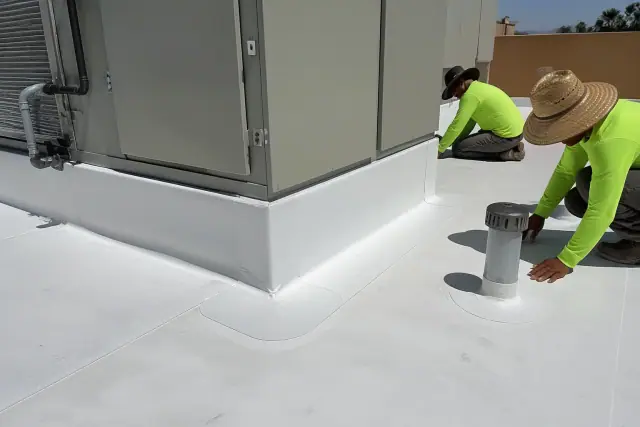
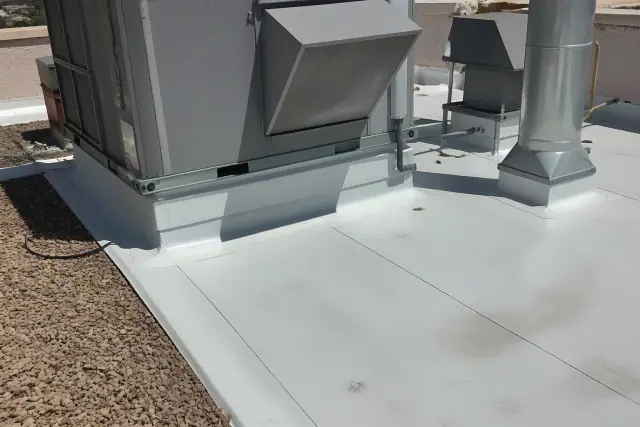
TPO membrane roof replacement around an HVAC unit on a commercial building in Phoenix, AZ.

A full replacement scope accounts for the existing roof, tear-off needs, substrate condition, insulation, drainage, penetrations, flashing, and the selected system. Coordinating those items in one project is often more practical than continuing section-by-section patches on a broadly deteriorated roof.

Request Estimate

Commercial Flat Roof Repair

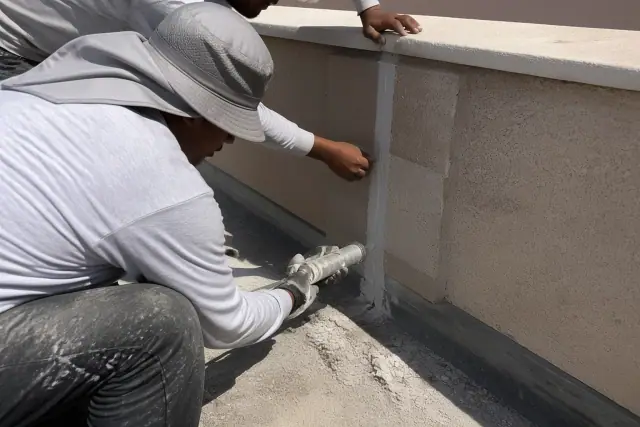
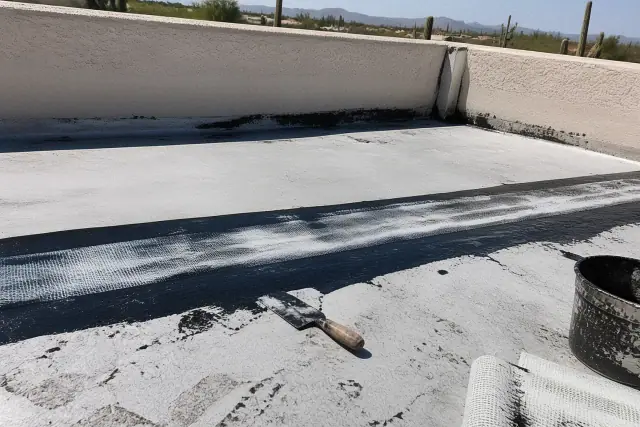
Contractor sealing joints on a commercial roof parapet wall in Phoenix, AZ.

When damage is isolated and the surrounding membrane remains serviceable, commercial flat-roof repair may be the sound choice. We document the affected area and recommend repair when it genuinely addresses the condition instead of defaulting to a larger replacement.

Request Estimate

Commercial Roof Coatings

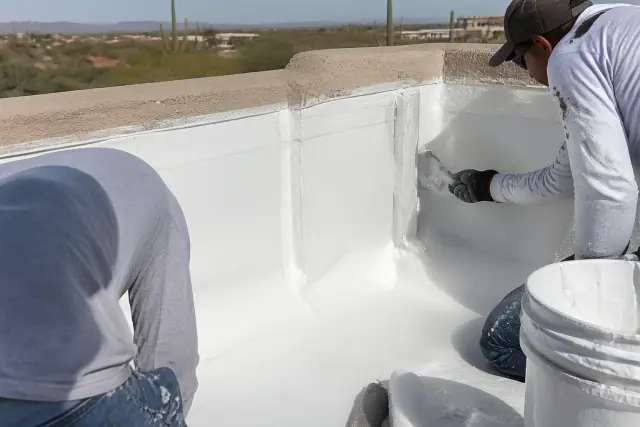
Crew applying white elastomeric roof coating to a parapet wall flashing at a jobsite in Phoenix, AZ.

A commercial roof coating can add a reflective protective layer when the existing roof is a suitable candidate. Silicone and acrylic coatings are also used over spray polyurethane foam, with scheduled recoating helping preserve that jointless roof assembly.

Request Estimate

Commercial Roof Inspections

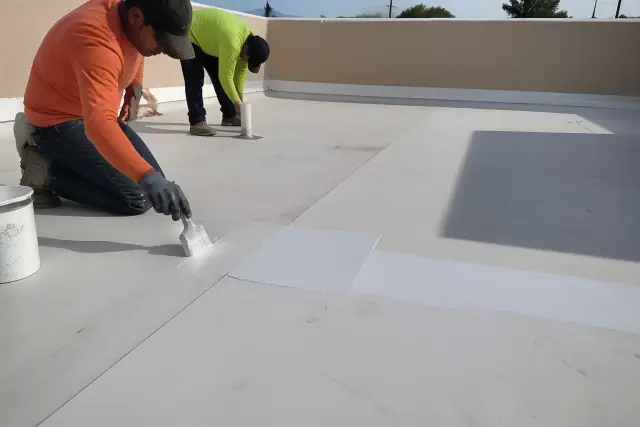
Contractor photo of a reflective coating patch on a TPO roof seam in Phoenix, AZ with tan gravel and a stucco parapet.

Commercial roof inspections evaluate membrane condition, seams, flashing, drainage, ponding areas, insulation moisture, HVAC curbs, and pipe boots. Infrared moisture scanning is used where trapped water is suspected beneath the membrane.

Request Estimate

Commercial Roof Maintenance

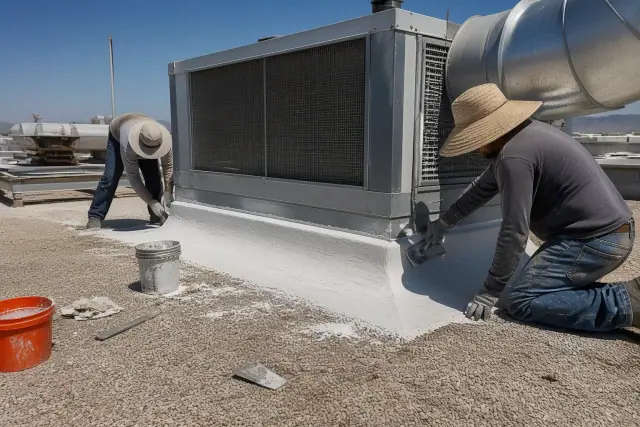
Technicians applying roofing mastic to a ventilation unit on a gravel roof in Phoenix, AZ.

Periodic inspection and maintenance help owners track seams, drainage, coatings, sealants, and fasteners before small defects spread. Maintenance is especially important for reflective membranes, spray foam coatings, and metal roofs exposed to continuous desert sun.

Request Estimate

Repair, Coat, or Replace Planning

Reinforced roofing repair on an expansion joint at a commercial site in Phoenix, AZ.

A repair-or-replace recommendation should come from measured roof conditions, not a generic formula or remote image alone. Photos, damaged-area measurements, moisture findings, remaining service life, and project economics help establish the appropriate path for the building.

Request Estimate
Roofing Materials

Commercial Roofing System Options

TPO, spray polyurethane foam, modified bitumen, built-up roofing, and metal each answer different building conditions. Structure, slope, wind-uplift demands, insulation goals, substrate condition, drainage, maintenance expectations, and ownership plans all influence the selection.

TPO roofing membrane and heat-welded seams installed around a rooftop vent on a commercial building in Phoenix, AZ.

TPO Roofing

White TPO creates a reflective, single-ply surface for low-slope commercial roofs. Its heat-welded seams form a continuous waterproof layer, while the attachment method is selected for the building structure and wind-uplift requirements.

  • Fully adhered configurations available for suitable roof assemblies
  • Mechanically attached configurations selected around structural and uplift needs
  • Ballasted configurations considered where the building can support them
  • Reflective surface limits absorption when rooftops reach 150-170°F
  • Commonly performs for 20 to 30 years with proper maintenance
Request Estimate
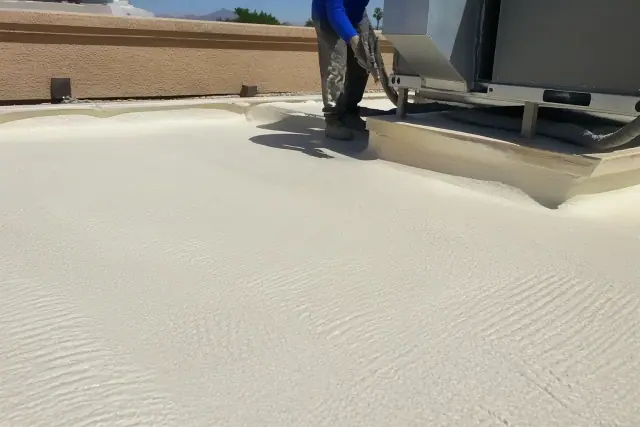
Spray foam roofing texture with ripple patterns near a rooftop HVAC unit and stucco wall in Phoenix, AZ.

Spray Foam Roofing

Spray polyurethane foam is applied as a liquid and expands into a fully adhered, jointless roof layer. Its combination of waterproofing and insulation at the roof plane can be valuable where Phoenix cooling loads dominate much of the year.

  • Jointless application eliminates traditional membrane seams
  • Fully adheres directly to the prepared deck or substrate
  • Can renew a suitable roof without full tear-off in many cases
  • Adds high R-value insulation directly at the roof plane
  • Uses a protective silicone or acrylic coating with scheduled recoating
Request Estimate
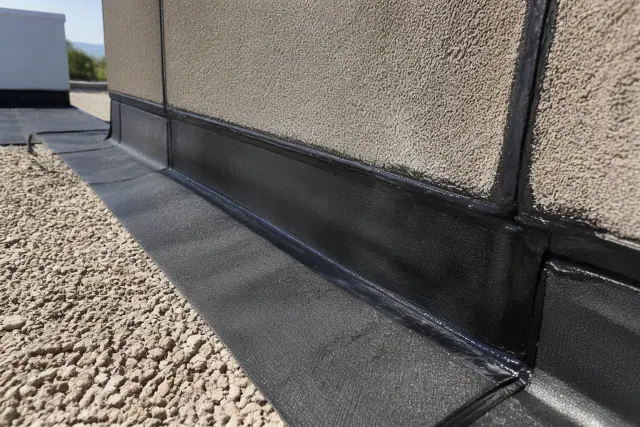
Modified bitumen roofing showing heat-welded seams at a parapet wall in Phoenix, AZ.

Modified Bitumen Roofing

Modified bitumen is one of the low-slope commercial systems we install and assess in Phoenix. Its condition should be judged at the cap sheet, seams, flashing, penetrations, insulation, and substrate rather than by roof age alone.

  • Suited to low-slope commercial roof applications
  • Granule loss can signal advanced surface wear
  • Cracking cap sheets can indicate compromised waterproofing
  • UV exposure and thermal cycling accelerate deterioration
  • Repeated section-by-section patching can cost more per square foot over time
Request Estimate
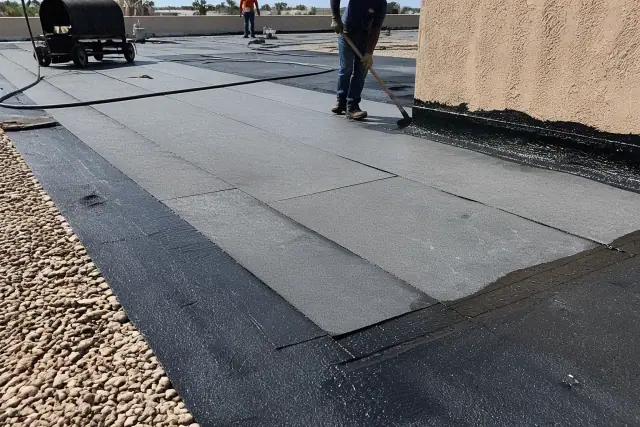
Built-up roofing installation with bitumen layers on a commercial building rooftop in Phoenix, AZ.

Built-Up Roofing (BUR)

Built-up roofing is evaluated as a complete low-slope assembly, including its waterproofing surface, insulation, deck, drainage, flashing, and penetrations. Widespread surface breakdown or moisture across different roof areas can make a coordinated replacement more practical than continuing patches.

  • Granule loss and alligatoring reveal surface deterioration
  • Cracking cap sheets can expose the waterproofing layer
  • Ponding history guides drainage and tapered-insulation planning
  • Infrared scanning helps locate suspected moisture beneath the surface
  • Current insulation R-value and deck needs are included in replacement scope
Request Estimate
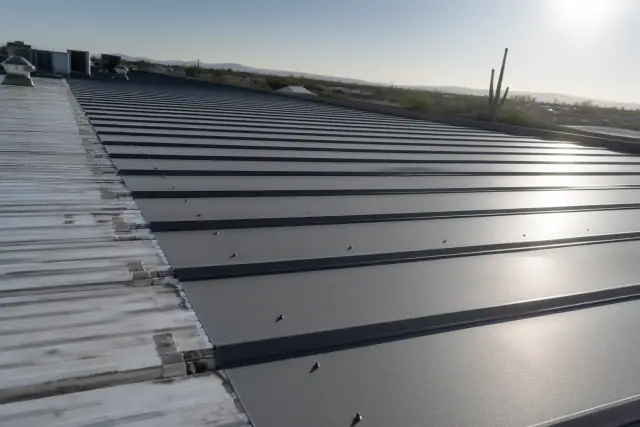
Close-up of overlapping metal roofing sheets secured with fasteners on a commercial building in Phoenix, AZ.

Commercial Metal Roofing

Standing-seam metal roofing suits industrial buildings, owner-occupied properties with long holding plans, and steeper-slope commercial structures. Reflective factory coatings help manage solar heat gain across industrial roof areas near the Sky Harbor corridor and West Valley manufacturing districts.

  • Service life often exceeds 40 years with minimal maintenance
  • Handles steeper slopes not intended for low-slope membranes
  • Resists wind uplift, hail, and UV degradation
  • Factory-applied reflective coatings help manage solar heat gain
  • Fasteners, panel seams, sealants, and coating wear require periodic review
Request Estimate
Finding Your Right Fit

Choosing the Right Replacement Approach

The right approach starts with the building, not a favorite material. Roof slope and structure, substrate condition, insulation needs, drainage, penetrations, wind-uplift demands, maintenance expectations, budget, and project timing determine whether TPO, spray foam, modified bitumen, BUR, metal, a coating, or a targeted repair fits the property.

In-Person Roof Assessment

Our estimator walks the roof before writing a quote, measuring square footage and checking the existing system, drainage, penetrations, flashing, and structural concerns. That direct assessment replaces satellite-only guesswork with building-specific observations.

Code-Conscious Project Scoping

Replacement projects are scoped around City of Phoenix Development Services Department permitting and current International Building Code requirements. Insulation R-value, deck conditions, material selection, and wind-uplift needs are addressed before the project moves forward.

Written Findings and Itemized Quotes

Inspection findings are documented with photos, damaged-area measurements, and a direct repair-versus-replace recommendation. Itemized quotes identify tear-off scope, insulation R-value, membrane thickness, flashing details, and warranty terms so owners can compare complete scopes.

What Sets Us Apart

Why Choose Us for Commercial Roof Replacement?

Phoenix Commercial Roofing Company holds Arizona Registrar of Contractors licensing and carries full liability insurance. Crews install TPO, modified bitumen, BUR, spray foam, and metal systems to manufacturer specifications and National Roofing Contractors Association industry practices, then review available manufacturer warranty options for the selected system and material.

Request Roof Assessment

Extreme Heat and UV Exposure

Sustained UV exposure degrades membranes through oxidation and plasticizer loss while daily thermal cycling stresses the surface. A TPO or modified bitumen system rated for 20-30 years elsewhere can see its service life compressed in Phoenix without reflective protection or proper maintenance.

Monsoon Wind and Dust Stress

Sudden downpours, high wind gusts, and haboob dust storms can stress seams, flashing, and drainage at the same time. Membranes already weakened by sun exposure are more vulnerable to wind-driven rain, leakage, or uplift during these events.

Ponding Water and Drainage Issues

A history of ponding water points to drainage and slope conditions that must be addressed in replacement planning. Heavy ponding can add tapered-insulation work, while standing water around seams, drains, and penetrations increases the consequences of membrane defects.

Recurring Leaks and Interior Damage

Ceiling stains, mold near HVAC penetrations, and leaks after repeated heavy storms can indicate widespread failure rather than one isolated puncture. Multiple leak points across different roof areas also put inventory, equipment, tenant spaces, and business operations at risk.

Membrane Surface Deterioration

Blistering, alligatoring, membrane shrinkage, and exposed fasteners are signs that routine repair may no longer be enough. On BUR and modified bitumen roofs, granule loss and cracking cap sheets can indicate that the waterproofing layer is compromised.

Roof Age and Expired Warranty

Most commercial roofing systems last 15 to 35 years depending on material and maintenance. When a roof approaches the end of its rated service life and its manufacturer warranty has expired, replacement planning can begin before a failure dictates the schedule.

How it works

Our Commercial Roof Replacement Process

The replacement process begins with direct roof access and condition documentation, then moves through moisture, drainage, material, code, quote, and scheduling decisions. Each stage turns observed conditions into a defined scope for the commercial building.

01.

Site Consultation and Roof Walk

An estimator walks the entire roof, identifies the existing system, and discusses budget constraints and timeline preferences. Direct access also reveals drainage, penetration, flashing, and structural conditions that remote images cannot fully show.

02.

Measurements and Photo Documentation

The roof area and damaged sections are measured, and visible conditions are recorded in photos. The resulting report shows damage as a percentage of total roof area and creates a factual basis for the recommendation.

03.

Moisture and Drainage Assessment

Inspectors evaluate ponding areas, drains, seam integrity, flashing, insulation moisture, HVAC curbs, and pipe boots. Where trapped water is suspected below the membrane, infrared moisture scanning helps define the affected scope.

04.

Repair, Coat, or Replace Recommendation

Measured damage, moisture findings, roof age, warranty status, and the economics of continued repair are compared. The written recommendation identifies whether a targeted repair, suitable coating, or full replacement best addresses the documented condition.

05.

Material, Code, and Quote Review

The proposed system is matched to structure, slope, uplift, insulation, drainage, penetrations, and substrate needs. The itemized quote records tear-off scope, insulation R-value, membrane thickness, flashing details, permit and code requirements, and warranty terms.

06.

Scheduling and Manufacturer-Spec Installation

Replacement is typically best scheduled from fall through early spring to avoid peak monsoon activity and extreme summer heat that can affect membrane adhesion. Crews install the selected system to manufacturer specifications and review the applicable manufacturer warranty options.

Plan Your Replacement

Schedule a Commercial
Roof Replacement
Consultation

Request an on-site roof assessment before recurring leaks or the next monsoon season forces the decision. We will document the existing assembly, discuss repair, coating, and replacement paths, and prepare a building-specific estimate.

Replacement Help

Commercial Roof Replacement FAQs

These answers cover the conditions, costs, materials, inspections, scheduling, and service-area questions Phoenix commercial property owners commonly consider before roof replacement.

Call Our Roofing Team

Many jurisdictions and insurers apply a version of the 25% rule when damage affects roughly 25% or more of the total roof area within a defined period. Replacement also becomes more practical when repair costs approach 25% of full replacement cost, leaks appear across multiple areas, or code-related insulation and deck upgrades affect the scope. An inspection should measure actual conditions before making the call.

Installed commercial roofing in Arizona typically runs between $5.50 and $14.00 per square foot depending on the system. A 10,000-square-foot flat roof therefore falls in a general range of $55,000 to $140,000 before insulation upgrades, tear-off, or deck repair. Roof size, substrate condition, penetrations, drainage design, insulation, and material selection shape the site-specific quote.

Most commercial roofing systems last 15 to 35 years depending on material and maintenance, while TPO commonly reaches 20 to 30 years with proper care. Standing-seam metal roofing often exceeds 40 years with minimal maintenance. Phoenix UV exposure and thermal cycling can shorten service life when reflective protection or maintenance is neglected.

Blistering, alligatoring, membrane shrinkage, exposed fasteners, granule loss, and cracking cap sheets all warrant evaluation. Ceiling stains, mold near HVAC penetrations, recurring storm leaks, or multiple leak points suggest the problem may extend beyond an isolated puncture.

Relentless UV exposure, extreme surface heat, and repeated thermal cycling accelerate oxidation and material movement. Monsoon wind, dust, sudden downpours, and ponding then stress seams, flashing, penetrations, and drainage on an already heat-aged roof.

TPO's white reflective surface reduces rooftop heat absorption compared with darker membranes, and heat-welded seams create a continuous waterproof layer. It can be fully adhered, mechanically attached, or ballasted according to the building structure and wind-uplift requirements.

In many suitable cases, spray polyurethane foam can be applied over the prepared existing substrate without a full tear-off. It expands into a fully adhered, jointless layer, adds high R-value insulation at the roof plane, and requires a protective silicone or acrylic coating with scheduled recoating.

Standing-seam metal is a strong option for steeper-slope commercial structures, industrial buildings, and owners planning to hold a property long term. It resists wind uplift, hail, and UV degradation, although its upfront installation cost is higher per square foot than membrane roofing.

The inspection covers membrane condition, seam integrity, flashing, drainage, ponding water, insulation moisture, HVAC curbs, and pipe boots. Suspected trapped moisture can be checked with infrared scanning, and the report documents photos, measurements, damaged-area percentage, and a repair-versus-replace recommendation.

A useful quote identifies tear-off scope, insulation R-value, membrane thickness, flashing details, and warranty terms in writing. It should also reflect the actual substrate, penetrations, drainage, and material selected so competing scopes can be compared consistently.

Fall through early spring is typically the best replacement window because it avoids peak monsoon activity and the most extreme summer heat. Scheduling from inspection findings helps place the project before the next monsoon season rather than during it.

A coating can be appropriate when the existing roof and substrate are suitable for renewal, but it does not correct every widespread moisture, deck, or membrane problem. An in-person inspection should compare coating, targeted repair, and replacement based on documented conditions.

Phoenix Commercial Roofing Company serves Phoenix and the surrounding metro area. Supported service areas include Scottsdale, Tempe, Mesa, Glendale, Chandler, and Peoria.