20-to-30-Year Service Life
A properly installed commercial SPF roof in the Phoenix area generally provides 20 to 30 years of service.
Phoenix Commercial Roofing Company explains that a properly installed spray polyurethane foam roof on a Phoenix commercial building typically lasts 20 to 30 years. The practical lifespan depends on inspection and recoating consistency because the elastomeric topcoat protects the foam core from Arizona sun and wear.
A properly installed commercial SPF roof in the Phoenix area generally provides 20 to 30 years of service.
Renewing the sacrificial elastomeric topcoat every 5 to 10 years shields the foam from UV exposure and membrane wear.
Regular inspections identify ponding, coating wear, flashing moisture, and punctures while maintenance is still manageable.
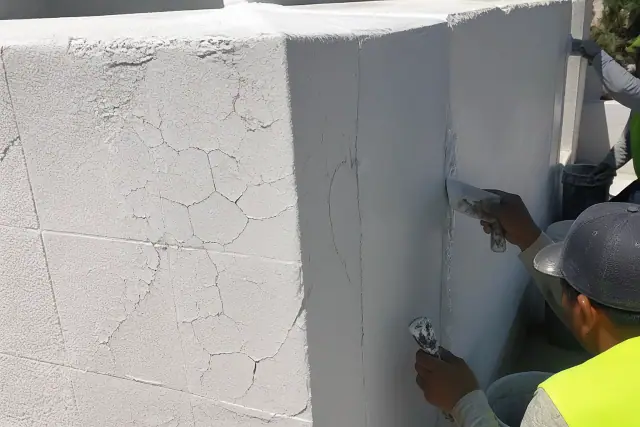
An intact reflective topcoat shields the foam beneath it. Visible UV degradation or membrane wear can signal that a recoat evaluation is due.
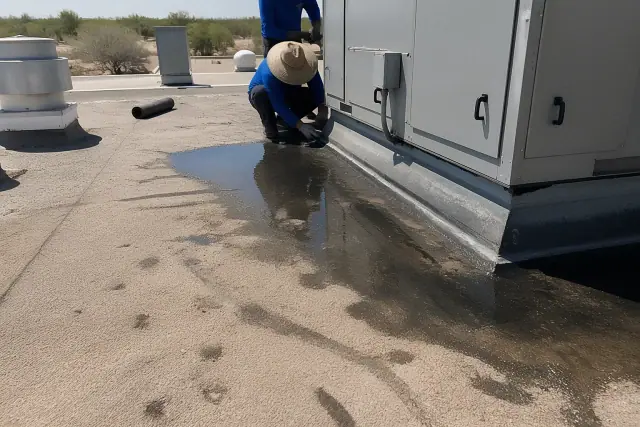
Ponding paths, service traffic, and puncture risks often concentrate around rooftop HVAC equipment. Protected access routes help limit mechanical wear on commercial foam roofs.
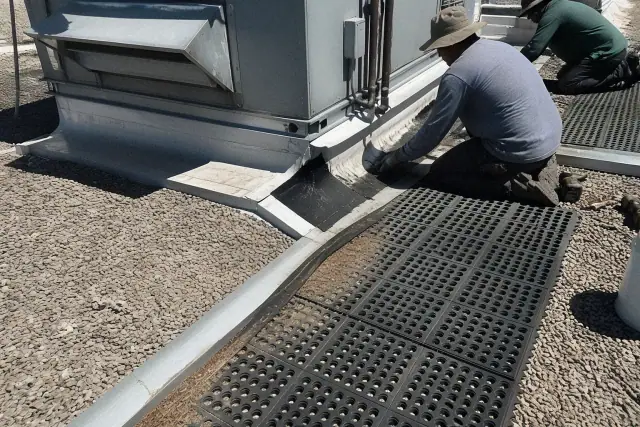
Foot-traffic pads and walkway mats protect routes past edge flashings. Debris and hidden moisture in these areas deserve extra attention after monsoon season.
Across Phoenix metro properties from downtown to Deer Valley and Ahwatukee, a well-installed SPF roof averages 20 to 30 years of service.
Systems installed at the specified 1.5 to 2.5 pound density with a full topcoat can reach 25 to 35 years; buildings on strict maintenance contracts may reach up to 40 years.
Maintenance can separate 15 years from 35 years on the same roof system. An ignored roof can fail in under 10 years, with skipped recoats driving premature failure.
New foam roof installation in Phoenix generally runs $6 to $12 per square foot; spraying over an existing sound roof runs $3,500 to $13,000 depending on roof size and condition.
| Roof Condition | What It Signals | Practical Action |
|---|---|---|
| Sound reflective topcoat | The foam core remains protected from Arizona UV and routine wear. | Inspect every 12 to 24 months and document ponding or punctures. |
| Topcoat at the recoat interval | The sacrificial coating typically needs attention every 5 to 10 years. | Use current coating condition to set the recoat scope. |
| Missed recoats or worsening wear | UV degradation, membrane wear, or moisture at edge flashings can shorten roof life. | Assess repair and recoating before leaks spread. |
A foam roof's long service life depends on keeping the closed-cell foam sealed beneath its reflective coating in a monolithic roof assembly. The foam can expand and contract with roof-deck movement through Arizona's summer-to-winter swings, while the exposed elastomeric topcoat takes the UV load and must be renewed. Treat the roof as a maintained assembly rather than a one-time installation.
Phoenix sees well over 100 days a year above 100°F, so UV exposure and thermal movement are central lifespan factors. Installation density and topcoat coverage set the starting point; ponding, punctures, edge-flashing moisture, rooftop HVAC work, mechanical wear, and unprotected foot traffic can shorten performance. Arizona monsoon-season inspections help catch debris and moisture before they become leaks.
How often should a foam roof be checked? Inspect it annually or every other year and again after monsoon season. When is recoating due? The usual interval is 5 to 10 years, but current topcoat condition should guide the timing. Can foam be applied over an existing roof? A sound existing roof can sometimes be sprayed over, with roof size and condition determining the scope.
Share the roof's age, last recoat date, visible ponding or leaks, and any recent rooftop work. A local commercial roofing team can inspect the topcoat, walkways, HVAC traffic areas, and edge flashings before recommending the next maintenance step.